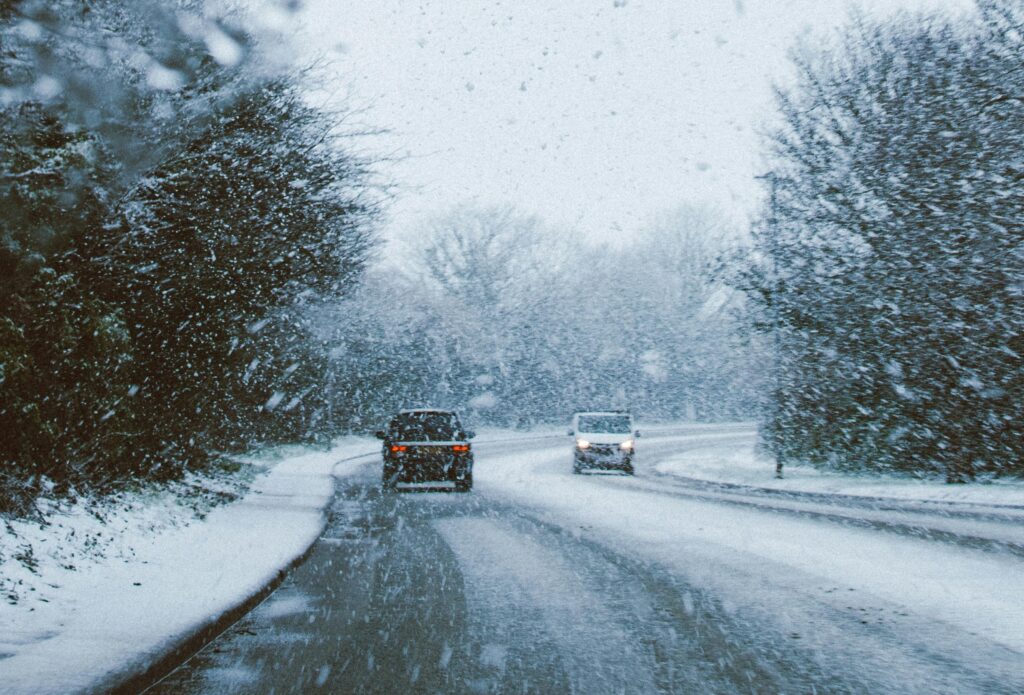
Winter is not letting up, and with heavy snow hitting this week, road conditions will quickly become slick and unpredictable. Whether you’re commuting to work, shuttling kids around town, or managing commercial vehicles, taking precautions can dramatically reduce the risk of accidents and costly insurance claims.
Here are practical tips to help keep you safe on the road when snow and ice make driving hazardous:
1. Slow Down & Increase Following Distance
Snow and ice reduce tire traction, making it harder to stop. The standard 3–4 second following rule should increase to 8–10 seconds in winter conditions. Even small adjustments in speed make a major difference on slick roads.
2. Avoid Sudden Movements
Sharp braking, quick acceleration, and fast turns can cause your vehicle to skid.
Instead:
- Apply the brakes slowly and evenly
- Accelerate gradually
- Turn the wheel gently
If you start to skid, steer in the direction of the slide and avoid slamming the brakes.
3. Clear Your Vehicle Before Driving
Ice-covered mirrors and snow-packed windshields are more than just a nuisance — they’re a safety hazard. Before driving:
- Completely clear windows, roof, headlights, and taillights
- Make sure mirrors and sensors are unobstructed
Snow sliding off your roof can impair your vision or endanger other drivers.
4. Watch for Black Ice
Black ice is nearly invisible and commonly forms:
- On bridges and overpasses
- At intersections
- In shaded road areas
- Early morning or late evening
If you notice a sudden lack of tire sound or overly smooth steering, slow down — you may be on ice.
5. Keep More Fuel in Your Tank
Aim to keep at least half a tank of fuel in cold weather. Not only does it protect your fuel system from freezing, but it also ensures you have heat if you become stuck or delayed.
6. Use Your Headlights
Snowfall reduces visibility, even during the day. Using low-beam headlights increases your visibility to other drivers and helps you see contrast on white road surfaces.
7. Avoid Cruise Control in Winter Weather
Cruise control can cause your wheels to accelerate unexpectedly on icy roads, leading to loss of control. Keep full manual control when conditions are slick.
8. Pack a Winter Emergency Kit
Getting stranded is more common in winter. Store these essentials in your vehicle:
- Ice scraper & snow brush
- Gloves, blankets, and warm clothing
- Flashlight & batteries
- Jumper cables
- Small shovel
- Traction aids (kitty litter or sand)
- Phone charger
- First aid kit
- Bottled water & snacks
9. Know When to Stay Home
Sometimes the safest choice is not to drive at all. If advisories or road closures are issued, consider delaying travel until conditions improve.
A Note for Business Owners & Commercial Drivers
Winter weather increases claims related to:
- Rear-end collisions
- Property damage in parking lots
- Workers’ compensation for slips & falls
- Delivery truck accidents
- Towing and rental reimbursement
Proactive safety practices, driver education, and proper insurance can make a major difference during winter months.
Driving in winter weather requires patience, preparation, and a few changes in your normal driving habits. The more cautious you are, the safer you will be.
If you have questions about personal or commercial auto coverage during the winter season, our team at Oxford Risk is here to help.
Stay safe out there! ❄️