

Builders Risk Insurance
A project is worth more every week it stands, and until it is finished it sits outside an ordinary property policy.
Everyone with money in the project, on either side of the contract.
Builders risk follows the project rather than a single company, so more than one party usually has an interest in it. Property owners, contractors, subcontractors, lenders and architects are the parties who most commonly buy or require the coverage.
- Real estate developers, whose liability runs from buying the land through building on it to selling the units.
- General contractors required by the contract to carry the policy for the owner's benefit.
- Owners on a ground-up build, where there is no existing property policy standing behind the work.
- Lenders financing construction, who want the collateral insured while it is being built.
- Larger developments run under an owner-controlled program, where the owner buys the coverage for everyone on site.
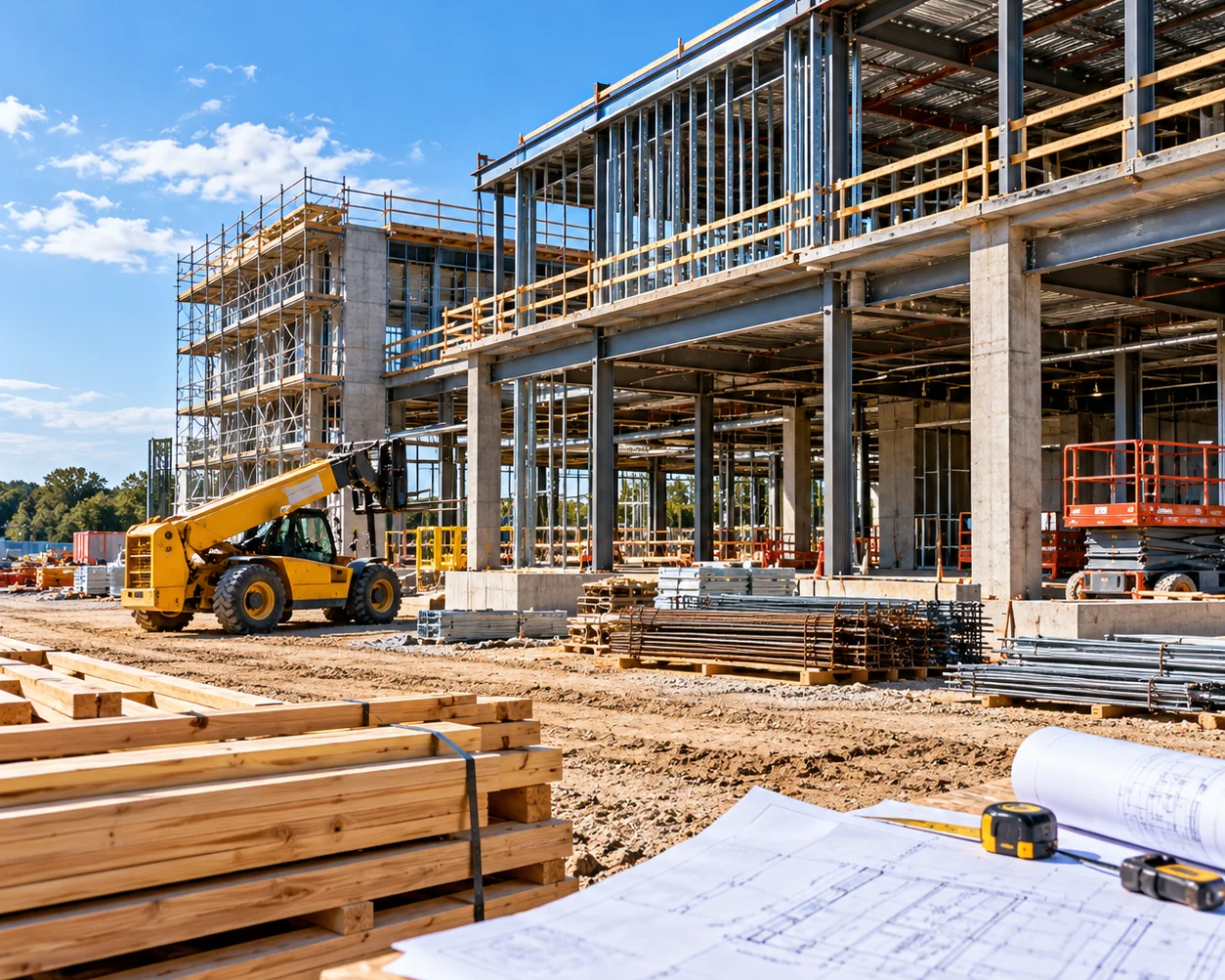
Builders risk covers a structure during the one period when it is most exposed and least protected.
Builders risk is property insurance written for the course of construction. The owner can take out the policy, but more commonly the owner requires the contractors to carry it. Either way it covers the building, the materials and the equipment while the work is in progress.
Because the insured value rises as the structure goes up, limits are often set as a fixed percentage of the total construction budget rather than a flat figure. The term matters as much as the limit: the policy runs for a stated construction period and typically will not allow repeated extensions of the timeline.
What the policy generally covers
- The building under construction, along with materials and equipment for it.
- Damage from events such as fire, hail and wind.
- Theft and vandalism, although vandalism by your own employees is typically excluded.
- Damage caused by a vehicle or aircraft striking the building.
- General liability, equipment breakdown, and ordinance and law coverage, which are commonly written alongside the property cover.
Where construction losses actually land.
The gaps that open up between the groundbreaking and the sale.
- The structure is at its most fragile before it is finished. Open framing, unfinished roofs and materials staged on site are exposed to fire, wind, theft and vandalism. A loss part way through means paying twice for the same work, once to build it and once to build it again.
- Coverage ends at completion; the risk does not. A finished building waiting to be sold or leased is still vulnerable to the same damage it faced during construction, often while standing empty. A vacant building policy provides the same or similar protection for that period. Theft coverage on an empty building commonly depends on an active security system, and units being staged for sale need their furnishings included as well.
- A mistake in the development process is not a property claim. Wrongful acts committed during any stage of development operations, including errors, omissions and negligence, sit outside a builders risk policy. Professional liability is the contract that answers for them, and with so many hands involved in a development one mistake is enough to produce a lawsuit.
- A subcontractor's certificate is not your coverage. Workers compensation is usually carried by the subcontractors on the job, but a policy that has lapsed or is out of date leaves the exposure with whoever is left standing. Carrying your own coverage is what closes a gap in theirs.
The decisions that shape the policy.
Builders risk is written project by project, so most of the terms are choices rather than defaults.
- Set the limit against the finished budget, not the current state of the work. The insured value grows with the project, which is why limits are frequently written as a fixed percentage of total construction cost. A figure set against early-stage value leaves the finish underinsured.
- Match the policy term to the real schedule. The policy covers a defined construction period and typically will not absorb repeated extensions. A timeline that slips is a coverage problem as well as a budget problem, so it is worth raising before the term runs out.
- Add the site's own catastrophe exposures deliberately. Flood and earthquake are not included unless specifically stated. On a beachfront site or near a fault line, the loss the project is most likely to suffer is the one the standard form leaves out.
- Decide who buys the coverage: each trade, or the owner. Under an owner-controlled insurance program, also called wrap-up insurance, the owner purchases the insurance for everyone involved in the development, contractors and subcontractors included. That normally means general liability, workers compensation and professional liability, plus anything else the project requires. The appeal is broader and more consistent coverage across every party on site, and the buying position that comes with placing a high volume of policies in one place.
- Plan for what the building becomes. Vacant building coverage while units sell, and property manager coverage if you hold and lease the finished building with tenants in it, are the two policies that pick up where builders risk ends.
Builders risk questions we hear most
Who buys the builders risk policy, the owner or the contractor?
Either can. The property owner is entitled to take out the policy, but more commonly it is coverage the owner insists the contractors carry. Since owners, contractors, subcontractors, lenders and architects all have money in the project, the question that matters is which of those parties the policy actually names.
Does builders risk cover injuries to workers on the site?
No. It is property coverage for the structure, the materials and the equipment. Injuries suffered by workers are handled by workers compensation, which is separately required by law.
Are flood and earthquake covered?
Not unless the policy specifically says so. Builders risk commonly excludes flood, earthquake and employee theft, so a site with a known exposure to any of them needs it addressed on the policy rather than assumed.
What happens to the coverage when the project finishes?
Builders risk ends at completion, and the risk does not. The permanent property coverage has to be in place as the policy comes off, which is why the policy term is matched to the real schedule and why it is worth planning for what the building becomes.
- General Liability Insurance
- Business Owners Policy
- Commercial Property Insurance
- Workers Compensation Insurance
- Business Auto & Fleet Insurance
- Business Interruption Insurance
- Professional Liability & E&O
- Cyber Liability Insurance
- Employment Practices Liability
- D&O & Management Liability
- Commercial Umbrella Insurance
- Crime Insurance
- Inland & Ocean Marine Insurance
- Surety & Commercial Bonds
- Liquor Liability Insurance
- Environmental Insurance
- Risk Management
Let's put the right policy in place.
Oxford Risk LLC is an independent agency. We represent you rather than a single carrier, which means we can place your coverage with the company whose appetite actually fits your risk. Tell us what you need to protect and an advisor will take it from there.
- Call (330) 315-3081
- Hours Monday - Friday: 8:00 AM - 4:00 PM
- Offices Fairlawn, OH, Cranberry Township, PA, Columbus, OH, Livonia, MI