

Inland & Ocean Marine Insurance
Property in transit, property in somebody else's hands, and cargo crossing an ocean.
Businesses whose property spends its working life away from the building.
If the value your business depends on is regularly in a vehicle, on a job site, at sea, or in somebody else's building, then for most of its life it is outside the reach of a policy written to your address.
- Contractors moving tools, equipment and materials between job sites.
- Companies shipping high-value goods to customers or retail outlets.
- Repair shops and any business holding a customer's property, where the item is in your care while it is on your floor.
- Importers and exporters whose goods cross an ocean before they are delivered.
- Shipyards, ship builders and ship operators, and the manufacturers and traders whose goods they carry.
- Businesses taking display equipment and demonstration models to trade shows.
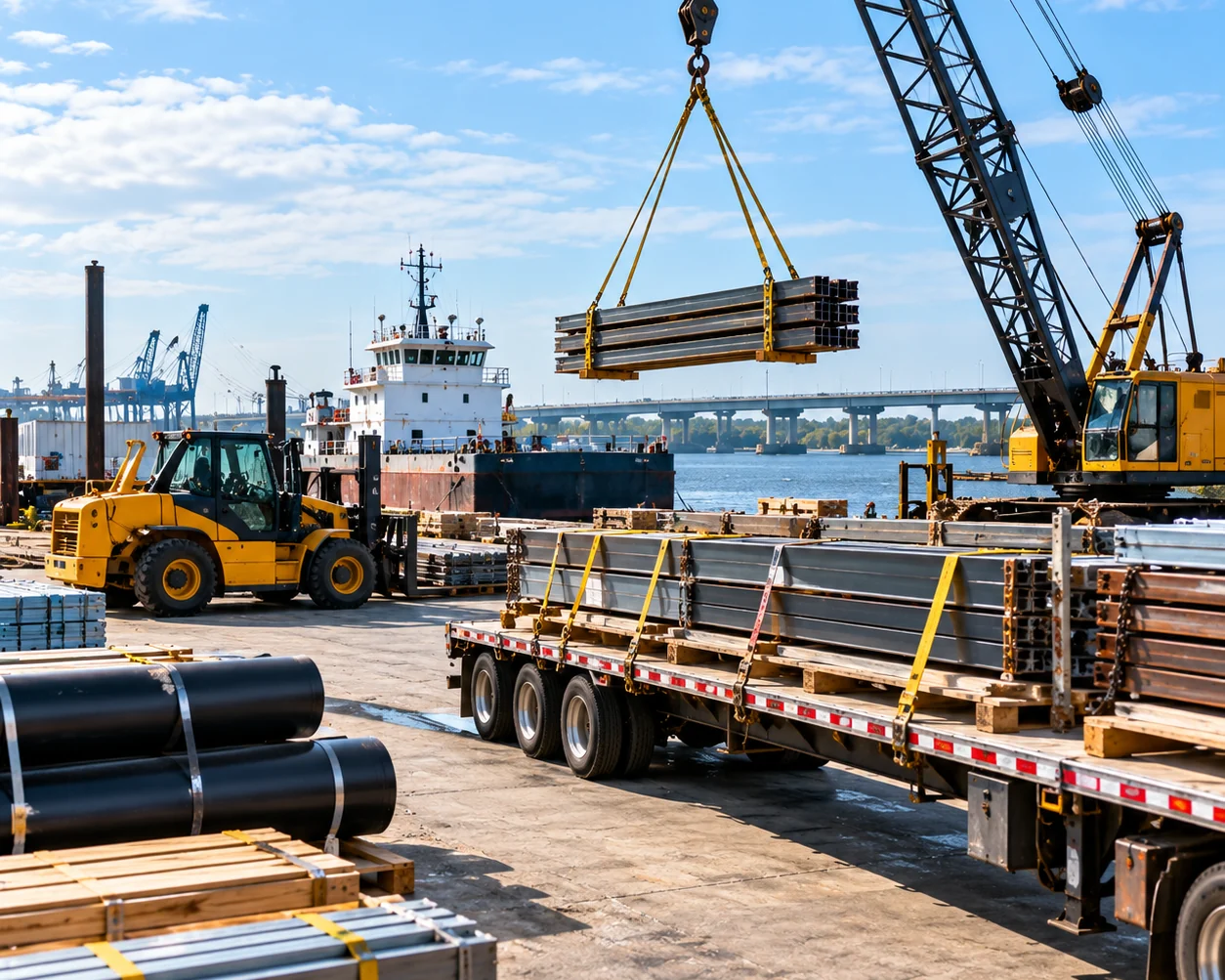
Marine coverage has little to do with water and everything to do with property that is not sitting at your address.
Despite the name, inland marine insurance has nothing to do with bodies of water. It covers the risks attached to property and equipment in transit by road or rail, or stored by third parties. For a business whose work depends on that property, losing it without coverage in place can create serious financial hardship.
Ocean marine does the same job on water, for cargo and for the vessels carrying it. Both contracts tend to be customized to the property and the route rather than sold off a shelf.
What ocean marine covers
- Cargo in ocean transit, and the hull of the vessel carrying it.
- Marine liability, and protection and indemnity.
- Pollution.
- Equipment.
Where property in motion actually gets lost.
The exposures a property policy written to a fixed address does not answer.
- Property in transit falls between policies. Once equipment or stock leaves the premises it is generally outside the commercial property policy, and not yet anyone else's responsibility either. Road and rail transit, staging at a job site and overnight storage in a truck all sit in that gap.
- Property you do not own can still be your loss. Equipment left with you for repair, storage or processing is under your control, care and custody. The owner expects it back in the condition it arrived, and a fire or a theft at your building does not change that expectation.
- The ocean is a different order of exposure. Cargo crossing water faces collision with another vessel, running aground, fire and modern-day piracy, and a single shipment can carry a large share of a business's value.
- A specified-risk policy pays only for what it names. The biggest divide in marine coverage is between policies that cover named risks and policies that cover everything except stated exclusions. The first usually carries the lower premium. The difference only becomes visible when the loss is something nobody thought to put on the list.
The decisions that shape the policy.
These contracts are built around your property rather than your address, so nearly every term is set deliberately.
- Inventory what actually moves. Tools, equipment, stock, building materials, demonstration units and customers' property each carry a value and a place they normally sit. The policy is only as good as the schedule behind it.
- Choose between specified risks and all risk. This is the single largest choice in a marine policy, and the one that decides what happens on an unusual loss. A lower premium on a named-risk form is a real saving and a real narrowing.
- Account for property in your care. If third-party equipment is stored, serviced or processed on your premises, that exposure has to be named. Some inland marine policies cover it; none should be assumed to. For a repair shop it is often the largest value in the building.
- Write the inland leg and the ocean leg with each other in mind. Goods arriving by sea and continuing by truck or rail pass from one contract into the other. The handoff is where a gap forms if the two policies were bought separately and never compared.
- Set limits against the largest single concentration. What matters is not the annual value shipped but the most that could be in one truck, one container or one storage location at one time.
Marine coverage questions we hear most
Does inland marine insurance have anything to do with boats?
No. Despite the name, inland marine covers property and equipment in transit by road or rail, stored by third parties, or otherwise away from your premises. Ocean marine is the separate coverage that deals with cargo and vessels on water.
My commercial property policy covers my equipment. Why do I need this?
Commercial property insurance typically covers only items and equipment physically located at your business premises. The moment the same equipment is in a truck, on a job site, at a trade show or in another location, inland marine is the policy that responds.
Is a customer's equipment sitting in my shop covered?
Only if the policy says so. Property temporarily under your control, care and custody is its own exposure, and some inland marine policies extend to third-party equipment stored on your premises. For a repair shop it is usually the most valuable property on site and the easiest to overlook.
Who buys ocean marine, the carrier or the owner of the goods?
Either. Ship operators take out their own policies, and importers, exporters, manufacturers and traders frequently buy separate coverage for their own goods, usually because it gives them better coverage limits or a faster claims process on the shipments they care about.
- General Liability Insurance
- Business Owners Policy
- Commercial Property Insurance
- Workers Compensation Insurance
- Business Auto & Fleet Insurance
- Business Interruption Insurance
- Professional Liability & E&O
- Cyber Liability Insurance
- Employment Practices Liability
- D&O & Management Liability
- Commercial Umbrella Insurance
- Crime Insurance
- Builders Risk Insurance
- Surety & Commercial Bonds
- Liquor Liability Insurance
- Environmental Insurance
- Risk Management
Let's put the right policy in place.
Oxford Risk LLC is an independent agency. We represent you rather than a single carrier, which means we can place your coverage with the company whose appetite actually fits your risk. Tell us what you need to protect and an advisor will take it from there.
- Call (330) 315-3081
- Hours Monday - Friday: 8:00 AM - 4:00 PM
- Offices Fairlawn, OH, Cranberry Township, PA, Columbus, OH, Livonia, MI