

Environmental Insurance
Pollution sits outside general liability by design, which leaves the cleanup bill with nowhere else to go.
Businesses whose work touches soil, water, fuel or older buildings.
Pollution is not only a heavy-industry problem. Any operation that stores fuel, disturbs a site, works inside older structures or occupies a property with a history behind it can cause contamination or inherit it.
- Contractors and excavators who disturb soil, encounter buried tanks, or work in buildings containing asbestos or lead.
- Businesses storing or handling fuel, solvents or chemicals on site.
- Property owners who take on a site with a record of prior industrial or commercial use.
- Operations where a release could reach groundwater, a storm drain or neighboring land.
- Businesses exposed to mold claims from tenants, occupants or customers.
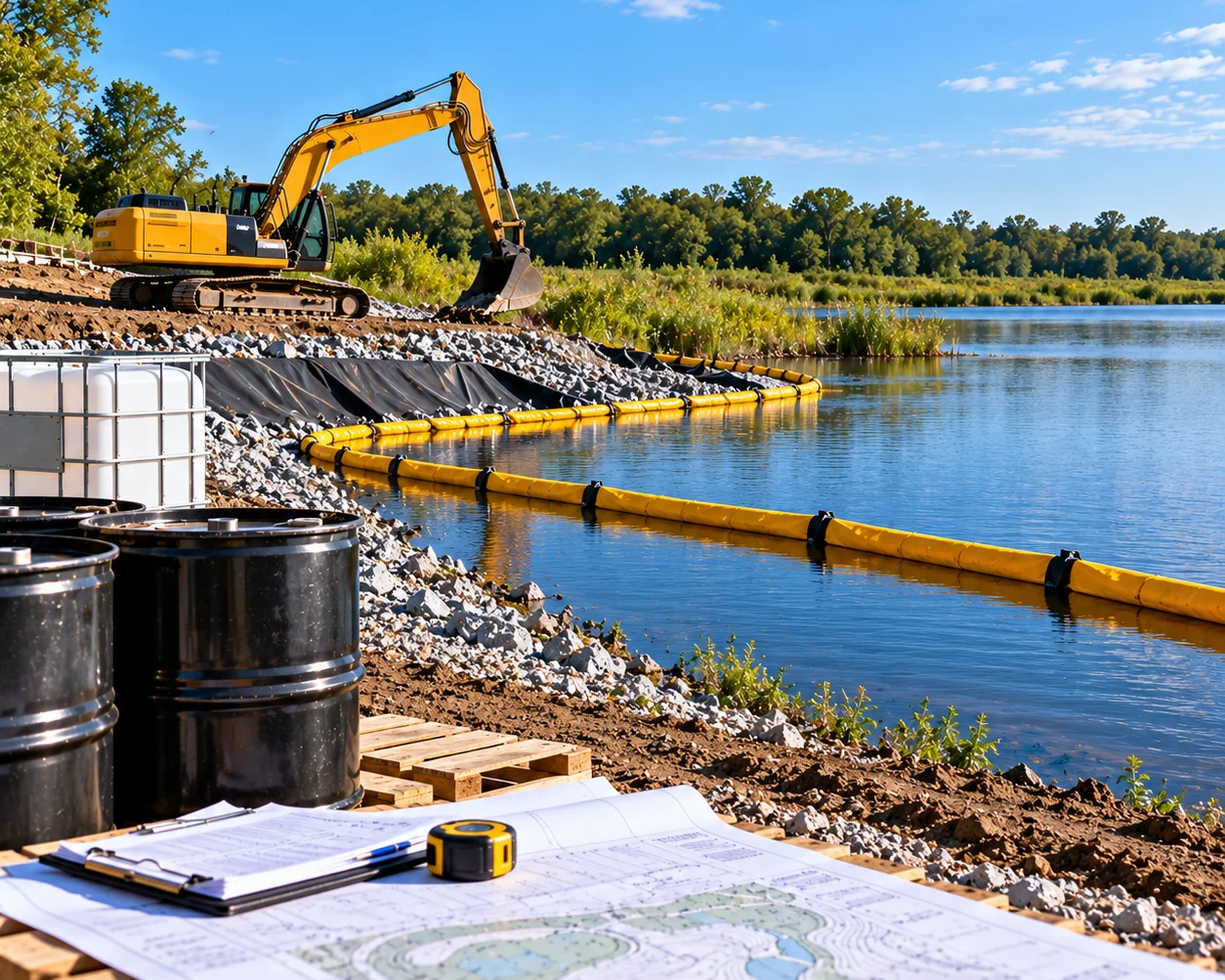
The expensive part of an environmental loss is usually not the damage. It is the cleanup.
When a business accidentally causes pollution, contamination or other environmental damage, the loss arrives in two halves. The first is ordinary: lost business, and the repair or replacement of equipment. The second is the clean-up operation and the damages attached to it, and that half is usually not covered by general business liability insurance.
Environmental insurance exists to answer the second half. Environmental concerns remain a leading societal and business issue, and businesses now face tougher environmental laws and greater public scrutiny than they once did, which means an incident is costly on more than one front.
Common exposures the policy is bought for
- Oil and fuel spills.
- Lead.
- Asbestos.
- Mold.
- Historic contamination: operations conducted in the past that produce damages now.
The decisions that shape the policy.
Environmental policies vary more than most, so the terms are worth reading rather than assuming.
- Name the exposures your operations actually create. Fuel, solvents, asbestos, lead and mold are different risks with different policy language behind them. A policy assembled around the substances and the sites you work with is the only one that responds when it matters.
- Decide whether historic contamination is in scope. If the concern is what earlier operations left behind, the policy has to reach backwards rather than only forwards from its start date. Long-term exposure is a specific ask, and it is where the coverage is most needed.
- Confirm that defense costs are included. Cover for the cost of defending a claim, award or no award, is a distinct feature of many environmental policies rather than something every form provides.
- Look for terms that track changes in the rules. Environmental regulations change, and so do the damages that apply to breaching them. A policy written to update automatically as those rules and amounts change is what keeps a gap from opening up over the long term.
- Treat the coverage as part of your risk position. Holding environmental insurance shows the exposure has been thought about, and the loss-prevention advice insurers offer is part of what comes with the policy.
Environmental questions we hear most
Does my general liability policy cover pollution?
Usually not. Clean-up costs and environmental damages are generally outside general business liability insurance, which is the reason environmental coverage is written as a separate policy.
What counts as an environmental claim?
The common ones are an oil or fuel spill and liability arising from lead, asbestos or mold. Contamination of soil or water caused by routine operations, and damages traced back to operations conducted years earlier, are environmental exposures as well.
Can I be liable for contamination that happened before I was here?
It is possible, and it is one of the main reasons the coverage exists. Historic contamination resulting from past business operations can produce damages now, and those long-term risks are exactly where an environmental policy earns its place.
Does the policy pay to defend me if the claim turns out to be unfounded?
Many environmental policies cover the cost of defending claims whether or not they result in a damages award. Because these claims are contested on technical ground, it is worth confirming in the policy language rather than assuming it.
- General Liability Insurance
- Business Owners Policy
- Commercial Property Insurance
- Workers Compensation Insurance
- Business Auto & Fleet Insurance
- Business Interruption Insurance
- Professional Liability & E&O
- Cyber Liability Insurance
- Employment Practices Liability
- D&O & Management Liability
- Commercial Umbrella Insurance
- Crime Insurance
- Builders Risk Insurance
- Inland & Ocean Marine Insurance
- Surety & Commercial Bonds
- Liquor Liability Insurance
- Risk Management
Let's put the right policy in place.
Oxford Risk LLC is an independent agency. We represent you rather than a single carrier, which means we can place your coverage with the company whose appetite actually fits your risk. Tell us what you need to protect and an advisor will take it from there.
- Call (330) 315-3081
- Hours Monday - Friday: 8:00 AM - 4:00 PM
- Offices Fairlawn, OH, Cranberry Township, PA, Columbus, OH, Livonia, MI