

Commercial Property Insurance
The building, everything in it, the income it produces, and the perils the standard form leaves out.
Any business with a building, contents or equipment it could not quickly replace.
Ownership is not the test. A business that leases its space still owns the equipment, fixtures, improvements and stock inside it, and still loses income when the space becomes unusable.
- Owner occupied buildings, offices, shops and industrial facilities.
- Tenants who own valuable equipment, stock or leasehold improvements.
- Operations whose revenue depends on specific machinery or on refrigeration, heating or cooling systems.
- Businesses holding property that belongs to customers.
- Building owners near a geological fault line, or carrying the earthquake exclusion without knowing it.
- Building owners with space standing empty between tenants, whether the vacancy was planned or not.
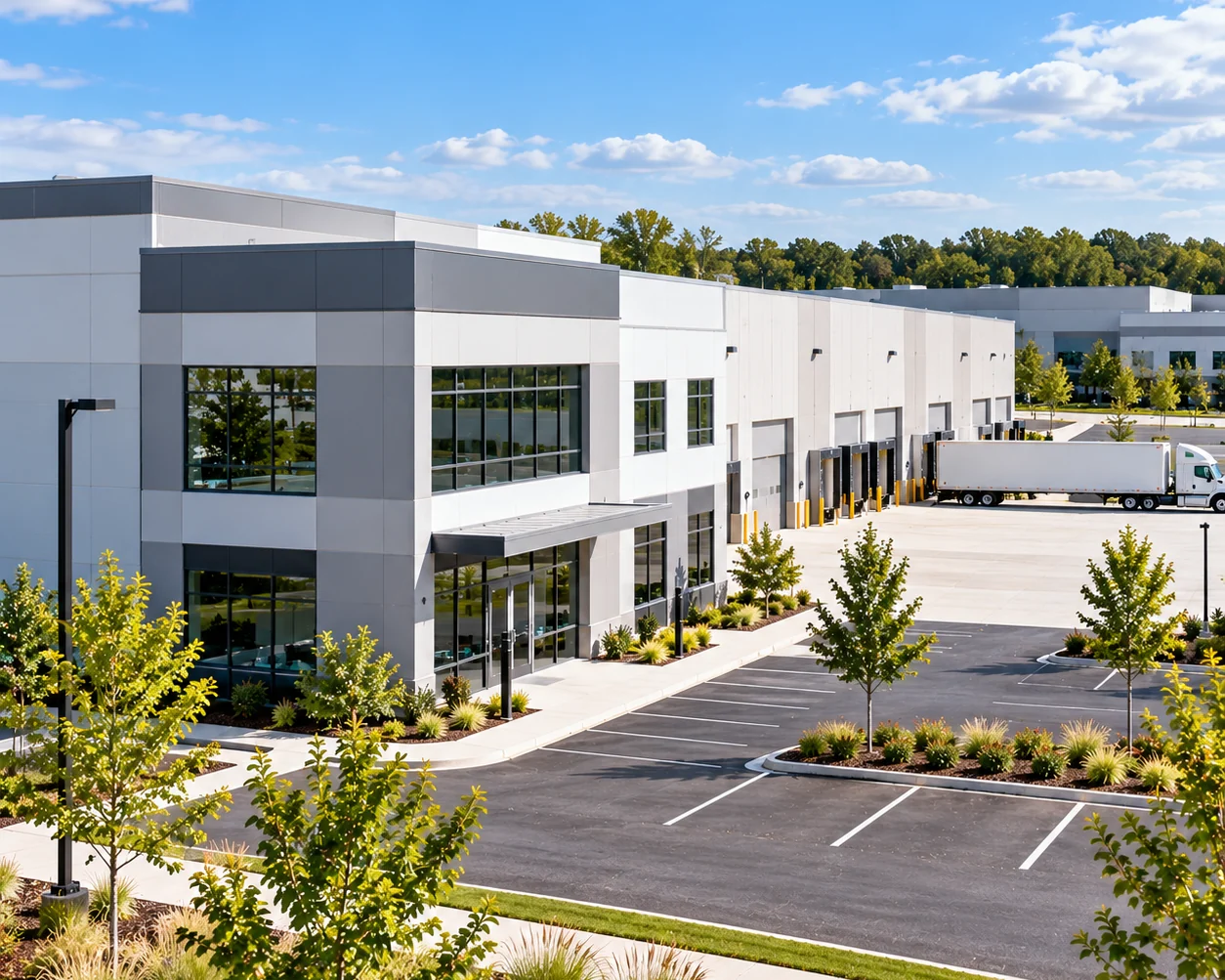
A property policy is defined as much by what it excludes as by what it covers.
Commercial property insurance pays to repair or replace what you own after a covered event, and it generally reaches further than the building: structure, equipment, fixtures, contents, stock and, in many cases, the property of others in your care. It also picks up the losses that follow from the damage, such as income lost while part or all of the operation cannot run.
The part that surprises business owners is the list of things it does not respond to. Three of the most consequential exposures a commercial building faces, earthquake, flood and equipment that fails on its own, sit outside the standard form, and a fourth, an extended vacancy, quietly reduces what the form pays.
Where property losses get expensive.
Usually not in the repair estimate. In the time, and in the exclusion.
- The downtime often costs more than the damage. A flood or a fire is not only a matter of replacing equipment and repairing a building. It is the weeks or months in which the facility cannot be used at all. That is why income coverage sits alongside the property limit rather than being treated as an extra.
- Water does not follow the flood map. For commercial buildings, sudden heavy rainfall is not necessarily the biggest flood risk. Clogged drains can turn ordinary rain or a snow storm into a catastrophic event, and a building outside a designated flood zone is not immune to flooding.
- An earthquake is a shutdown event, not just a structural one. Quakes crack roads, bring down power lines and start fires, and they trigger landslides. Even where a building takes limited damage, the surrounding disruption can close a business for days or weeks, which is the case earthquake business interruption coverage is written for.
- Equipment can fail without anything happening to it. A compressor that seizes, a circuit that shorts, a wiring fault in a refrigeration unit: nothing external struck the equipment, so the property form does not respond, while the business stops all the same.
- Rebuilding can cost more than the building was insured for. Debris has to be cleared before reconstruction starts, and a rebuild can end a grandfathered exemption from current building codes, forcing upgrades the original structure never had to meet. Both are real costs that arrive after the loss, not before.
- An empty building is a different risk than an occupied one. Vacant commercial property draws accidents, vandalism and theft, and with nobody on site a small problem becomes a large one. A sprinkler leak that would be noticed within an hour in an occupied building can run for weeks in an empty one.
The decisions that shape the policy.
Most property claims that disappoint a business owner were decided at placement, not at the adjuster stage.
- Earthquake is a separate decision. Where the property form excludes it, commercial earthquake coverage is what answers damage to the building and to business property such as inventory and equipment, and business interruption can often be included. It has its own exclusions worth knowing: fire, damage to vehicles, land damage such as sinkholes and erosion, and flooding caused by the quake, including a water main break or a tsunami, which belongs to a flood policy.
- Flood is a separate policy, and the market you buy it in matters. There are two routes: the federal National Flood Insurance Program and non-NFIP coverage. Non-NFIP policies may pay full replacement cost where NFIP payments account for depreciation, and may include loss of business during the rebuilding phase, which NFIP does not cover. Flood coverage also commonly carries a waiting period of about 30 days before it takes effect, so it is not something to arrange when a storm is already forecast.
- Decide whether equipment failure is covered before it happens. Systems breakdown coverage is the only part of a property program that answers an internal failure, and it reaches equipment across the whole building rather than only production machinery, including heating, air conditioning, refrigeration, elevators, networks, telephone systems and electronic devices. Computer equipment is typically covered for physical hardware damage rather than software failure or malware. The income extension is usually the more valuable half. Do not assume a manufacturer's warranty stands in for it, because warranties tend not to reach accidental damage caused by human error.
- Read the vacancy clause before a tenant leaves. Many commercial property policies treat a building as vacant unless 31 percent of its total square footage is occupied and being used for its intended purpose. A strip mall with most of its units empty can meet that test even while it is being actively re-leased. The clause then limits the policy: a standard form typically ceases coverage for water damage, theft, sprinkler leakage and vandalism after 60 days of vacancy, and a loss that occurs during a vacancy may be paid at a reduced amount, commonly by as much as 15 percent.
- Cover the vacancy rather than hope it ends first. Vacant building coverage supplements the property policy during a planned or unplanned vacancy, generally on a named peril basis that can include fire, wind, water damage, sprinkler leakage, theft and vandalism, and it can add liability coverage for an accident on the property while it stands empty.
- Check how the associated costs are handled. Debris removal, building code upgrades triggered by a rebuild, and weather damage to the property while reconstruction is under way are each addressed differently from one policy to another, and each one is capable of being the largest line on the claim.
- What drives the premium. The type of building, where it is located, the type of business operating in it, and whether fire alarms and security systems are in place.
Commercial property questions we hear most
Does my commercial property policy cover flood damage?
Not necessarily, and most business owners assume otherwise. Flood generally needs its own policy, available through the National Flood Insurance Program or from non-NFIP markets. Non-NFIP coverage may pay full replacement cost and may include lost business income during the rebuild, neither of which is true of NFIP coverage.
Is earthquake damage included?
Commercial property policies commonly exclude it, so separate commercial earthquake coverage is what responds to the building and to business property such as inventory and equipment.
A machine in our building stopped working. Is that a property claim?
Usually not. The property form responds to equipment damaged by an external event such as fire or water. Mechanical failure, breakdown, a wiring problem or a short circuit falls to systems breakdown coverage, which covers repair and replacement and can be extended to the income lost while the equipment is down.
Does the policy cover property that belongs to my customers?
Many commercial property policies include property of others in your care, but the limit is often modest relative to how much customer property a business actually holds. If holding other people's goods or equipment is part of the operation, that is worth treating as its own coverage question rather than assuming the base form is sufficient.
- General Liability Insurance
- Business Owners Policy
- Workers Compensation Insurance
- Business Auto & Fleet Insurance
- Business Interruption Insurance
- Professional Liability & E&O
- Cyber Liability Insurance
- Employment Practices Liability
- D&O & Management Liability
- Commercial Umbrella Insurance
- Crime Insurance
- Builders Risk Insurance
- Inland & Ocean Marine Insurance
- Surety & Commercial Bonds
- Liquor Liability Insurance
- Environmental Insurance
- Risk Management
Let's put the right policy in place.
Oxford Risk LLC is an independent agency. We represent you rather than a single carrier, which means we can place your coverage with the company whose appetite actually fits your risk. Tell us what you need to protect and an advisor will take it from there.
- Call (330) 315-3081
- Hours Monday - Friday: 8:00 AM - 4:00 PM
- Offices Fairlawn, OH, Cranberry Township, PA, Columbus, OH, Livonia, MI