

Classic Car Insurance
An agreed-value contract from a different set of carriers. The value is settled when the policy is written, not argued about after the loss.
Owners of a car that a market valuation would get wrong.
- Owners of a restored or modified car, where the money spent is reflected in no market value.
- Owners of rare, exotic or limited-production vehicles.
- Owners who want original parts rather than whatever an ordinary policy would authorize.
- Owners who drive the car occasionally, to shows and events, rather than daily.
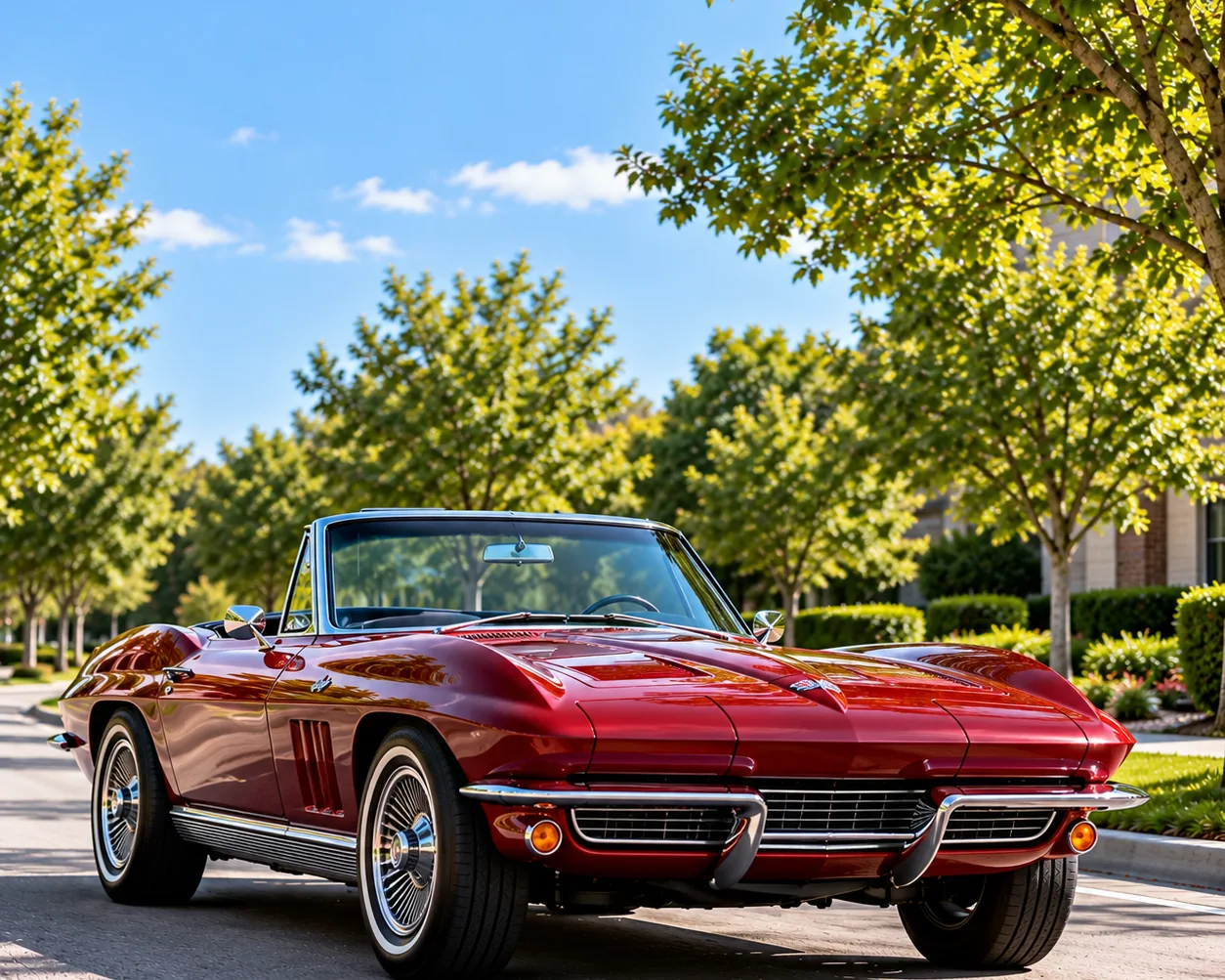
A standard auto policy settles a total loss at market value, which is the wrong measure for a car whose value is not the market average.
Classic, collector and antique car insurance are different names for the same category of specialty policy. What qualifies depends on the carrier, but these policies are generally written for vehicles of a certain age that also have distinctive characteristics, such as being particularly rare.
Vehicles these policies are written for
- Antique cars, generally 45 years old and up, and classic cars generally 20 to 40 years old.
- Vintage cars built before 1925.
- Exotic and rare vehicles, and modern collector special editions.
- Muscle cars modified for performance, race and track cars, and replica kit cars.
Eligibility is the carrier's definition rather than a universal standard, so age alone does not settle it and a vehicle that qualifies in one place may not in another.
What goes wrong when a collector car sits on a standard policy.
- A total loss settled at market cash value. An ordinary policy looks at what the vehicle is judged to be worth at the time of the claim. For a car that is rare or restored, that figure and the cost of replacing it are unrelated numbers, and the difference is yours.
- Parts the policy will not pay for. Authentic parts for a specific vehicle can be excluded by an ordinary auto policy, or cost more than it will pay. The guarantee to cover necessary authentic parts is what the specialty policy adds.
The decisions that shape the policy.
Each of these is set when the policy is written, which is the point: the arguing happens before the claim rather than after it.
- Settle the agreed value carefully. The carrier agrees the value of the car at the start of the policy, and that figure is the payout if the car is destroyed or damaged beyond economic repair. It is worth arriving at deliberately and revisiting as the car changes in value or as work is done to it.
- Confirm what the parts guarantee actually covers. The value of this coverage is in which parts it will pay for and up to what point, since that is precisely where an ordinary policy falls short.
- Choose usage terms you can live with. Specified annual mileage and event-only use are real restrictions. The right policy is the one whose limits match how you actually use the car.
Classic car questions we hear most
Does my car qualify as a classic?
That is the carrier's definition rather than a universal one. These policies generally cover vehicles of a certain age that also have distinctive characteristics such as being particularly rare, from vintage cars built before 1925 through to modern collector special editions.
Can I drive it every day?
Usually not on this kind of policy. Many apply only to limited use, which can mean a specified low annual mileage or only trips to exhibitions and parades. A daily driver belongs on a standard auto policy.
If the car is a total loss, how is the payout decided?
That depends on which basis the policy is written on. A standard auto policy settles at market cash value, which for a rare or restored car is often well below what it would take to replace. Agreeing the value at the start of the policy is what removes that argument from the claim.
Will the policy pay for original parts in a repair?
Only if the contract says so. Which parts are used, and whether they are factory-original, is a term of the policy rather than a choice made at claim time, so it is worth reading exactly what any parts guarantee covers before you need it.
- Home Insurance
- Condo Insurance
- Renters Insurance
- Mobile Home Insurance
- Flood Insurance
- Auto Insurance
- Motorcycle Insurance
- RV Insurance
- Off-Road & Recreational Vehicle Insurance
- Boat & Watercraft Insurance
- Umbrella Insurance
- Life Insurance
- High Net Worth Insurance
- Pet Insurance
- Event & Special Event Insurance
Let's put the right policy in place.
Oxford Risk LLC is an independent agency. We represent you rather than a single carrier, which means we can place your coverage with the company whose appetite actually fits your risk. Tell us what you need to protect and an advisor will take it from there.
- Call (330) 315-3081
- Hours Monday - Friday: 8:00 AM - 4:00 PM
- Offices Fairlawn, OH, Cranberry Township, PA, Columbus, OH, Livonia, MI