

RV Insurance
An RV is a vehicle and a place you live in. An auto policy is written for only the first of those.
Owners who use the RV as a residence, even for a weekend.
The more time the RV spends parked and lived in rather than driven, the further the exposure moves from what an auto policy contemplates.
- Motorhome and camper owners taking family trips and weekend travel.
- Owners who spend extended periods in the RV, where it functions as a dwelling for weeks at a time.
- Anyone traveling with valuable contents, from electronics to sports and outdoor equipment.
- Owners who travel long distances or out of state, since the territory covered changes the policy.
- Anyone financing an RV, where physical damage coverage is required rather than optional.
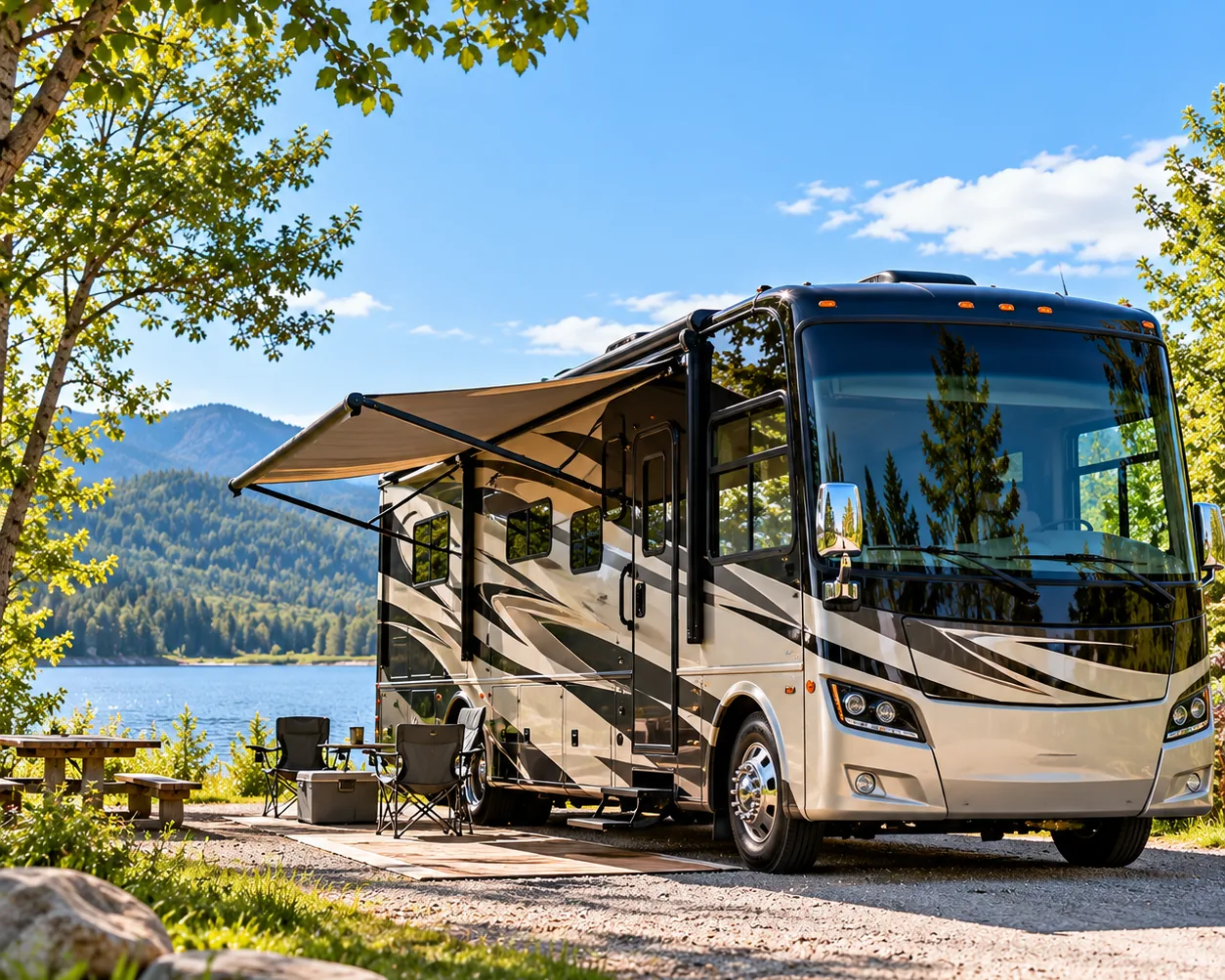
Parked, an RV stops being a vehicle. That is when the coverage has to change with it.
At first glance, insuring a recreational vehicle looks like insuring a car. The difference is that the RV lifestyle brings exposures a personal auto policy is not built around, which is why the specialized policy exists.
What coverage you need varies with where you travel, what kind of RV you own, and your driving history. Those three answers move the policy more than anything else.
What actually happens to an RV.
More of it happens at the campsite than on the highway.
- Someone is injured at your site. While the RV is parked and being lived in, an injury claim looks more like a homeowners claim than an auto one. Vacation liability is the coverage written for that situation.
- The windshield goes. On a camper this is not a minor repair. The glass is large enough to be costly on its own, and sourcing a replacement from a specialized supplier can add both expense and delay.
- The awning is destroyed by wind. Awnings and gas bottles are among the most expensive individual items on an RV to replace, and general policy item limits are not set with them in mind.
- The RV is stolen or broken into. It sits unattended in parking areas, campgrounds and storage lots, with the contents inside. Theft has to be on the policy alongside collision and fire.
- A breakdown strands you mid-trip. The RV is both the transportation and the lodging, so one mechanical failure takes out both. Towing, and coverage for a rental car or accommodation, is what keeps that from being the end of the trip.
The decisions that shape the policy.
The policy follows the RV and how it is used, so both have to be described accurately.
- State how much you actually live in it. A vehicle used for a week each summer and one lived in for months are different risks. How much of the year the RV serves as a residence is what determines whether vacation liability and the personal property side need to be built up.
- Set the liability side the way you would on a car. An RV policy carries liability for injury and property damage you cause, and uninsured and underinsured motorist coverage for the driver who hits you and cannot pay. Both work as they do on an auto policy, and the limits are a choice rather than a default.
- Describe where you travel. Coverage varies with the territory covered as well as the type of RV and the driving history. A route that crosses state lines is worth stating rather than assuming.
- Put the windshield and the awnings on the list. Both are expensive, both are specific to this vehicle, and both are commonly limited unless the policy names them. Confirm the glass coverage and the awning and gas bottle allowance.
- Value the contents honestly. The belongings inside an RV are the belongings of a household in miniature. Personal property coverage should reflect what actually travels in it.
- Decide about replacement cost. Replacement cost coverage and a settlement based on depreciated value produce very different outcomes on a total loss. It is a choice worth making deliberately, and one that matters most on a newer unit.
- Cover the trip, not just the vehicle. Look for towing and roadside assistance sized for the vehicle, and for coverage that provides a rental car or accommodation if the RV is out of action while you are away from home.
RV questions we hear most
Can I just add the RV to my auto policy?
An auto policy is written around driving, and an RV spends much of its time parked and in use as a living space. Vacation liability, enhanced personal belongings coverage, attached accessories, windshield and awning allowances and trip-related coverage are the reasons the specialized policy exists.
What is vacation liability?
Coverage for injury and damage claims that arise while the RV is parked and being used as a residence rather than driven. It addresses the part of RV ownership that behaves less like operating a vehicle and more like occupying a home.
Are my belongings inside the RV covered?
Through the personal belongings portion of the policy, which on an RV policy is usually written more generously than a general policy would treat items in a vehicle. The limit should be set against what actually travels with you.
What happens if the RV breaks down on a trip?
Towing and roadside assistance addresses getting the vehicle moved, which on an RV requires equipment a standard tow cannot always provide. Some policies also cover a rental car or accommodation while the RV is out of action, since the vehicle is also the lodging.
- Home Insurance
- Condo Insurance
- Renters Insurance
- Mobile Home Insurance
- Flood Insurance
- Auto Insurance
- Classic Car Insurance
- Motorcycle Insurance
- Off-Road & Recreational Vehicle Insurance
- Boat & Watercraft Insurance
- Umbrella Insurance
- Life Insurance
- High Net Worth Insurance
- Pet Insurance
- Event & Special Event Insurance
Let's put the right policy in place.
Oxford Risk LLC is an independent agency. We represent you rather than a single carrier, which means we can place your coverage with the company whose appetite actually fits your risk. Tell us what you need to protect and an advisor will take it from there.
- Call (330) 315-3081
- Hours Monday - Friday: 8:00 AM - 4:00 PM
- Offices Fairlawn, OH, Cranberry Township, PA, Columbus, OH, Livonia, MI