

Flood Insurance
A separate policy from a separate market. It is never an endorsement on the home policy, and most owners learn that after the water arrives.
Property owners in a flood zone, and property owners who are not.
The flood map tells you how likely the event is. It does not tell you whether you are covered, and it does not tell you what the loss would cost you.
- Owners outside a high-risk area who have concluded from that alone that they do not need the coverage.
- Anyone who has not actually read what their home insurance policy says about flood.
- Anyone who could not fund a full reconstruction and months of displacement out of pocket.
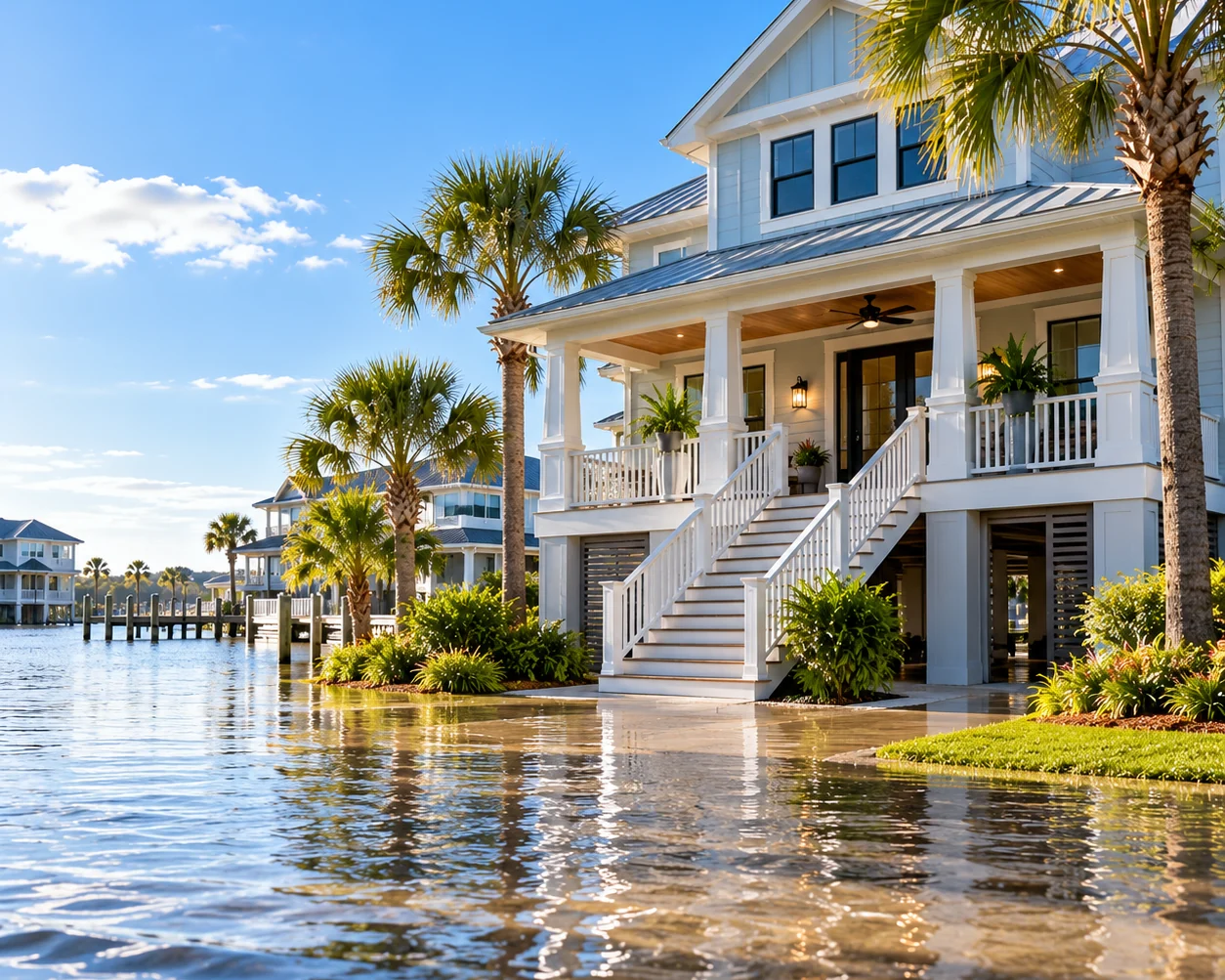
Flood is a low-likelihood, high-cost risk, which is the worst combination to be uninsured against.
A flood claim is rarely a partial loss. It can mean most of the contents of the home gone, major reconstruction, and months out of the property while it is made habitable again, all at the same time.
What a flood policy generally responds to
- Flooding caused by rainstorms and snowmelt.
- Storm drainage systems.
- Dam failures.
The flood risk where the property sits is a significant factor in what the policy costs, which is a reason to compare rather than a reason to skip the coverage.
The three assumptions that leave a property uninsured.
- That the flood zone is the risk boundary. Flooding is possible nearly anywhere, and the damage does not scale down because the area was not designated high risk. A property outside a mapped zone can still flood, and it will be uninsured when it does.
- That the home insurance policy responds. Flood is excluded from a homeowners policy. Assume there is no coverage unless the policy specifically states otherwise, because that is almost always the accurate assumption.
- That a government program has it covered. The National Flood Insurance Program guarantees that insurance is available in specific areas. It covers only a small share of homes, availability is not the same thing as being covered, and a property the program does not reach needs a policy found in the market instead.
The decisions that shape the policy.
- Read the causes the contract names. Coverage varies between policies, so the list of causes in the policy is what decides a claim, not the general category of flooding.
- Size it against what recovery actually costs. The realistic loss is rebuilding, plus replacing contents, plus living somewhere else while the work is done.
Flood questions we hear most
Does my homeowners policy cover flood damage?
Generally no. Flood is excluded from a standard home insurance policy, so unless it specifically says it provides the coverage, a separate flood policy is required.
I am not in a flood zone. Do I still need it?
Flooding is a potential risk nearly everywhere, and the cost of the damage does not depend on how the area was mapped. Being outside a high-risk zone changes the likelihood and the price, not whether a loss would be covered.
What actually counts as a flood under the policy?
The contract names the causes it will pay for, and they are broader than a river leaving its banks. Flooding from rainstorms and snowmelt is the common case. Reading the causes the policy names is the only reliable way to know what is in and what is out.
How much flood coverage should I carry?
Size it against what recovery would actually cost rather than against the mortgage balance or the figure a programme happens to offer. The limit that matters is the one that gets the building and its contents back to usable, and that is a conversation worth having before a claim.
- Home Insurance
- Condo Insurance
- Renters Insurance
- Mobile Home Insurance
- Auto Insurance
- Classic Car Insurance
- Motorcycle Insurance
- RV Insurance
- Off-Road & Recreational Vehicle Insurance
- Boat & Watercraft Insurance
- Umbrella Insurance
- Life Insurance
- High Net Worth Insurance
- Pet Insurance
- Event & Special Event Insurance
Let's put the right policy in place.
Oxford Risk LLC is an independent agency. We represent you rather than a single carrier, which means we can place your coverage with the company whose appetite actually fits your risk. Tell us what you need to protect and an advisor will take it from there.
- Call (330) 315-3081
- Hours Monday - Friday: 8:00 AM - 4:00 PM
- Offices Fairlawn, OH, Cranberry Township, PA, Columbus, OH, Livonia, MI