

Senior Care and Residential Facility Insurance
Twenty-four hour responsibility for people who cannot fully look after themselves is a different risk from clinical treatment, and it is underwritten differently.
Operations caring for people who depend on them.
Facility based and in-home operations alike, across the range of care levels.
- Assisted living, independent living and companion living communities.
- Memory care and Alzheimer's facilities.
- Skilled nursing and subacute facilities.
- Retirement communities and respite care providers.
- Hospice care and home health care agencies.
- Residential drug treatment centers, recovery residences and sober living facilities.
- Pharmacies and providers of durable and home medical equipment.
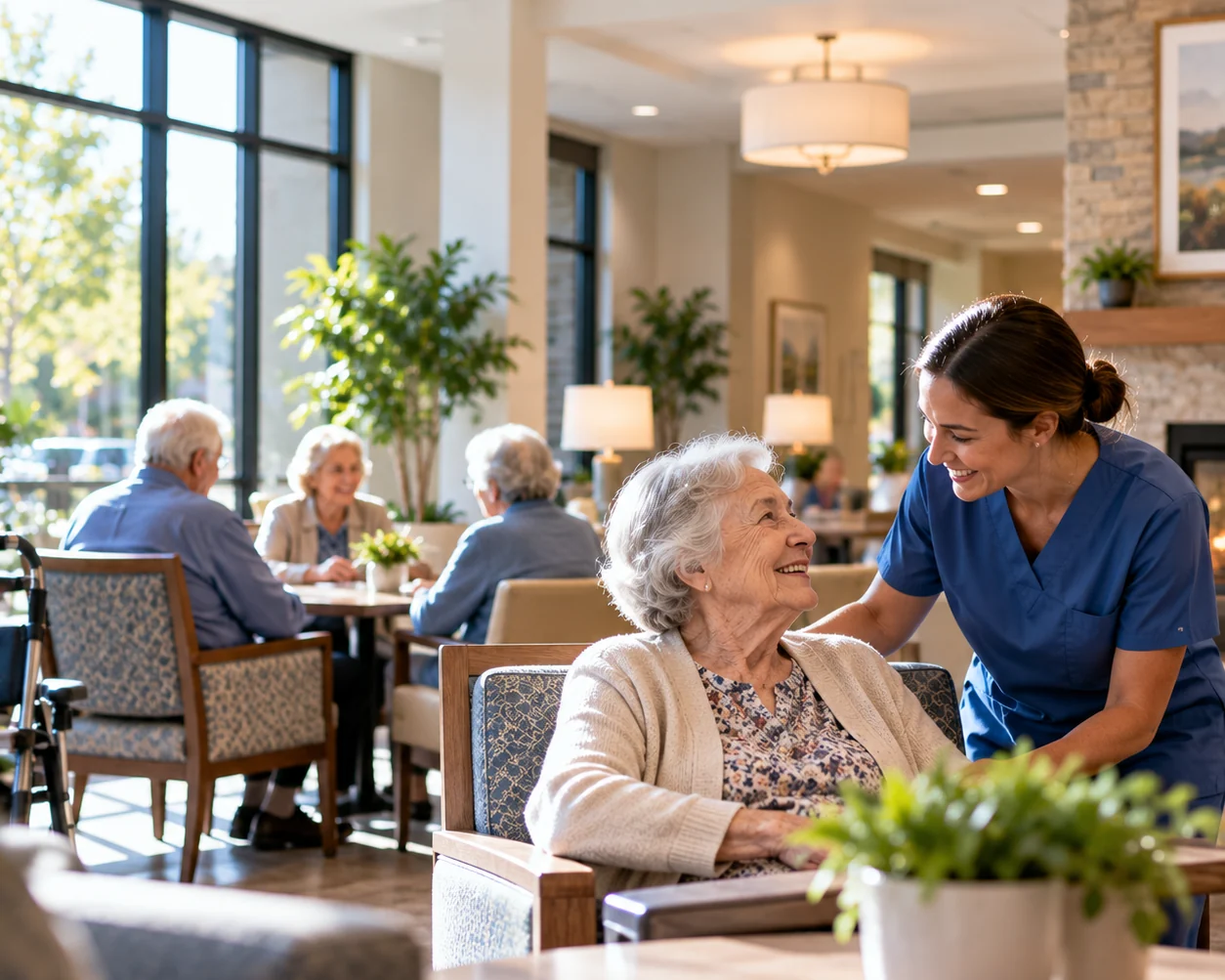
The exposure here is custody and supervision, not the medical chart.
Seniors and residents need different levels of care depending on their health, and the insurance follows that rather than the signage. Skilled nursing and subacute facilities do not carry the same risks as ancillary services such as home health care and hospice. Assisted living serves a different population from memory care and can raise different coverage concerns. Pharmacies and providers of durable and home medical equipment add needs of their own.
What runs through all of it is a business responsible around the clock for vulnerable people, often in a communal residential setting. That produces a claim profile built on supervision, allegations of abuse or misconduct, emergency evacuation, and reputation, which is why these operations are underwritten and priced separately from clinical practices.
What drives claims in residential care.
These are the exposures that set the premium in this segment.
- Allegations of abuse and molestation. A business providing personal care to a vulnerable population can face these claims, and every one of them has to be defended at significant cost.
- Supervision itself. In a residential setting the exposure is not a treatment decision but the hours between them: a resident who leaves the building unsupervised, a resident in crisis, a population whose judgment is impaired by illness or withdrawal.
- Licensing boards, peer review and credentialing. Regulatory action runs on its own track. It does not require a lawsuit to begin and it still requires paid defense.
- Reputation. Word of mouth carries this industry. An allegation of abuse, malpractice, negligence or improper maintenance of the facility does damage during the investigation, not only after a finding.
- Care delivered inside a client's home. When the work happens in someone's house, the exposures move with it.
- Employee injury. Lifting, transferring and assisting residents is physical work, and the workers compensation exposure is real in every one of these settings.
What belongs on a senior care or residential program.
Several of these lines exist only for this industry, and they are the ones a generic business package will not contain.
- Abuse and molestation liability. Pays defense costs and damages awarded on claims arising from the care of vulnerable people. Optional innocent party coverage extends to employees who are sued or must defend criminal charges.
- Professional liability. For claims that negligence or malpractice in the care provided caused harm, including care delivered in a client's home.
- Medical director's liability. Written for the supervisory role, which carries claim potential even where there is no direct treatment.
- Administrative and license defense. Legal costs of defending actions by state licensing boards, peer review and credentialing bodies and other regulatory matters, alongside malpractice coverage rather than inside it.
- Emergency evacuation expense. Reimbursement for the cost of moving residents out on an emergency basis.
- Emergency event management expense. For operations adversely affected by a violent event or an outbreak of illness at an insured location.
- Business income. Extended to cover the loss of income during a period the facility has to close.
- Public relations expense. Reimbursement for expenses tied to a criminal investigation, an administrative proceeding or a claim alleging violations of federal, regional or local law.
- Directors and officers liability. For allegations of wrongful acts in the management of the operation.
- Employment practice liability. Defense costs and damages on allegations of harassment, discrimination and other misconduct in employment, including hiring, promotion and firing.
- Crime and employee dishonesty. Written for theft by an employee from the company or from a client, including cash, jewelry, medication and unauthorized credit card use, and for third party theft in a client's home.
- Business auto, hired and non-owned. Fleet coverage for company vehicles, and hired and non-owned auto where employees or volunteers use their own cars for the work.
- General and commercial liability, property and equipment limits. The premises foundation, with limits set against expensive medical equipment where the facility uses it.
- Cyber liability and workers compensation. Resident and client records make breach exposure substantial, and workers compensation answers the injuries that come with physical care work.
What changes from one operation to the next.
The abuse, supervision and evacuation exposures are shared. Where the care happens changes almost everything else.
Residential senior care facilities
Assisted living, independent and companion living, memory care, skilled nursing, respite care, hospice and retirement communities all insure communal living. Reputation is the asset that fills the building, and the population served matters to the underwriting: assisted living provides resources for a very different population from an Alzheimer's and memory loss facility, and that can raise different coverage concerns.
Home health care agencies
The work happens in the client's house, so the exposures leave the premises with the caregiver. Professional liability has to answer alleged mistakes and negligence during a visit, general liability answers property damaged in someone's home, and abuse and molestation liability matters because of how intimate the work is. Crime coverage carries more weight here than in a facility: an employee alone in a home has access to cash, jewelry and medication, credit cards can be misused, and a third party can steal from the client or from your employee while they are there. Every caregiver is also a driver.
Residential drug treatment centers
Inpatient services are the core, but the schedule has to account for everything else the center runs: crisis intervention, recovery residences, sober living, step-down programs and outpatient services each carry their own risks. Residential settings are vulnerable to accusations of abuse and sexual misconduct, all of which must be defended, and supervision of a population in crisis is the exposure behind that, including residents leaving the facility. Centers providing crisis intervention may need specialized coverage for the high-risk situations they encounter.
Senior care and residential questions we hear most
Why is abuse and molestation coverage treated as a core line here?
Because providing personal care to vulnerable people is the exposure that defines this industry. Claims of abuse and molestation must be defended whether or not they have merit, and that defense is expensive on its own. The coverage pays defense costs and damages awarded by the court, and optional innocent party coverage exists for employees who are sued or must defend criminal charges.
Is a senior care facility insured the same way as a medical practice?
No. A clinical practice is underwritten around treatment and the equipment behind it. A residential facility is underwritten around 24 hour custodial responsibility: supervision, evacuation, abuse allegations, communal living and reputation. The applications, the carriers and the pricing are different.
What does emergency evacuation expense coverage actually pay for?
The costs of moving residents out of a facility on an emergency basis, which can be substantial when everyone being moved needs assistance. A companion line, emergency event management expense coverage, responds when a violent event or an outbreak of illness adversely affects an insured location, and business income coverage can be extended to the period the facility has to close.
Our caregivers drive their own cars between clients. Is that covered?
Not by a fleet policy, which covers vehicles the company owns. Hired and non-owned auto coverage is what responds when employees or volunteers use their personal vehicles for the business, and in an in-home care operation that is usually most of the driving.
We provide more than inpatient treatment. Does the policy follow the extra services?
Only if it was written to. Crisis intervention, recovery residences, sober living, step-down programs and outpatient services each present their own risks, and a package assembled for inpatient care alone can leave them outside the form. Services vary enough from one center to the next that the schedule has to be built against what your operation actually does.
- Contractors, Trades & Field Services
- Manufacturing & Distribution
- Energy, Oil & Gas
- Agriculture & Farm
- Transportation & Logistics
- Trucking Insurance
- Automotive Businesses
- Restaurant, Hospitality & Food Service
- Retail & Consumer Businesses
- Beauty, Salon, Spa & Personal Care
- Sports, Fitness & Recreation
- Cannabis Insurance
- Medical, Dental & Veterinary Practices
- Professional Services
- Technology & Digital Businesses
- Nonprofit, Community & Public Entity
- Real Estate, Property Owners & Lessors
Let's put the right policy in place.
Oxford Risk LLC is an independent agency. We represent you rather than a single carrier, which means we can place your coverage with the company whose appetite actually fits your risk. Tell us what you need to protect and an advisor will take it from there.
- Call (330) 315-3081
- Hours Monday - Friday: 8:00 AM - 4:00 PM
- Offices Fairlawn, OH, Cranberry Township, PA, Columbus, OH, Livonia, MI