

Restaurant, Hospitality & Food Service Insurance
The kitchen, the bar, the guests you serve, and the income that stops the day the doors close.
Anywhere the public eats, drinks or stays the night.
This is the hub for the whole segment, because the exposures overlap even when the businesses do not resemble each other. A taproom and a hotel bar have the same liquor problem. A food truck and a full kitchen have the same spoilage problem.
- Full-service restaurants, cafes and quick-service kitchens.
- Nightclubs and bars, where alcohol is the primary draw rather than an accompaniment.
- Food trucks, catering, concession, vending and ice cream operations.
- Hotels, motels, inns and bed and breakfasts, including those with a restaurant, bar, valet or shuttle.
- Campgrounds and RV parks, with the amenities and seasonal patterns that come with them.
- Breweries, wineries and distilleries, whether or not they pour on site.
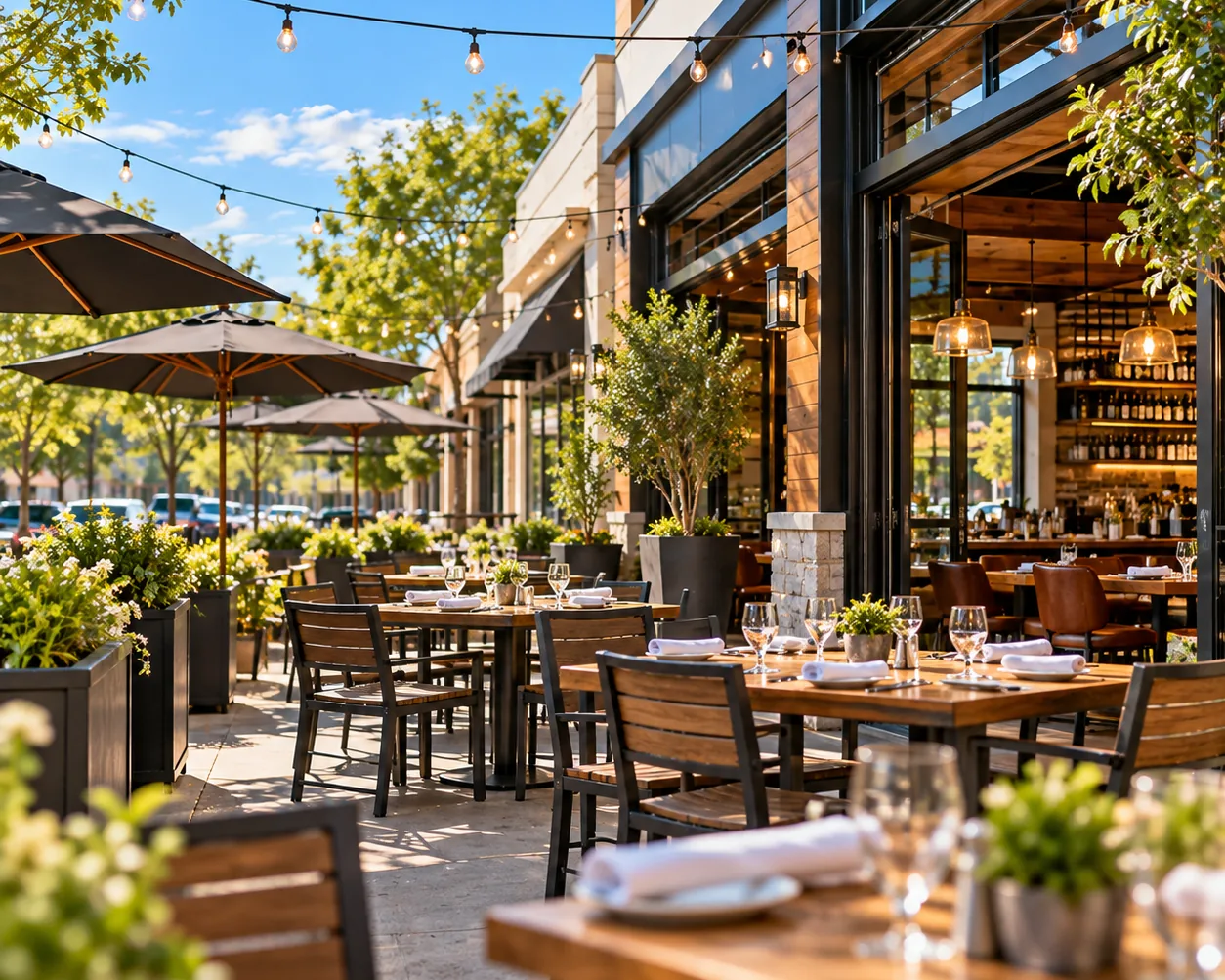
Serving the public food and drink creates exposures a general business policy was never written to answer.
Restaurants, bars, food trucks, hotels, campgrounds, breweries, wineries and distilleries all put guests, alcohol and prepared product in the same place at the same time. That combination is what makes the coverage different, and it is why a policy assembled for this industry usually reaches risks an owner had not thought to ask about.
For most operators the building and its equipment are the largest single investment, so property and the liability owed to customers and staff sit at the center of the program. The parts that get missed are the ones further out: fraud and data theft that come with handling cash and card payments, product thrown away after a power outage or refrigeration failure, and the revenue lost while the room is closed for repairs after a fire.
Where losses in this industry actually happen.
The claims that recur across dining rooms, taprooms and guest rooms alike.
- Closing is the loss, not the damage. A fire, a burst line or an inaccessible building takes the repair bill and the revenue at the same time. In an industry with thin margins and perishable stock, the period with no sales is usually the more serious half of the claim.
- Someone gets sick and the cause is argued about afterward. A foodborne illness claim can arrive days later, from a guest who ate elsewhere too, and it still has to be defended. Contamination can also force a closure of its own, which is a lost income problem on top of a liability one.
- The drink leaves with the customer. Liability for an intoxicated patron follows them off the property. Claims of this kind are often tenuous and are expensive to defend regardless.
- Refrigeration failure destroys inventory. A power outage or a failed compressor ruins everything in the walk-in.
- Equipment failure stops service outright. A cooker, still, fermenter, fryer or HVAC system going down is not a deferrable repair in a business that cannot serve without it. Replacement values on commercial kitchen and production equipment are high enough that a single failure can be a solvency question.
- Payments and guest records are a data exposure. Handling cash and cards all day invites fraud and internal theft, and the customer data behind reservations and loyalty programs invites the rest. Neither is a property loss.
The lines this industry is actually written on.
Which of these belong on a policy depends on whether you pour, whether you cook, whether people sleep on the property and whether you produce anything.
- Commercial property. The building where it is owned, and in every case the contents: kitchen and production equipment, bar and dining fixtures, guest room furnishings and stock. This is the largest schedule on most accounts in the segment.
- Business income and extra expense. Replaces revenue while the operation is shut for a covered loss. It can be extended to utility interruption, and to a supplier who cannot deliver and forces you to close, which is a different trigger from damage to your own building.
- General liability and premises liability. The working coverage for guest injury and property damage in a business built on people moving through a room in the dark, in a crowd, or across wet floors.
- Liquor liability. Covers defense costs and damages when an intoxicated patron causes injury or property damage. It is a requirement of doing business anywhere alcohol is served or produced, and it is not part of general liability.
- Food spoilage, contamination and product recall. Three related but separate things: product ruined by a covered equipment or power failure, income lost to a contamination shutdown, and the cost of withdrawing product already in the market when a safety risk is discovered.
- Equipment and systems breakdown. Repair or replacement of the mechanical and electrical systems the operation depends on, which is a different peril from fire or water and is generally excluded from property.
- Innkeepers' legal liability. Specific to lodging. You have a legal obligation to keep guests' belongings secure, and in some cases you are responsible for their loss or damage. Requirements vary by location, so this is a coverage to place against the law where you operate.
- Business auto, hired and non-owned. For delivery vehicles, shuttles, distribution trucks and the food truck itself. Personal auto policies exclude business use, so even an employee running one errand is an exposure.
- Crime, fidelity and cyber liability. Crime and fidelity for cash handling and employee theft, cyber for the card and guest data behind every transaction and reservation.
- Workers' compensation and employment practice liability. A kitchen is a high-injury workplace and the industry runs on large, fast-turning staffs, which makes both of these active coverages rather than paperwork.
What changes from one kind of operation to the next
The same food, guest and liquor exposures, arranged differently enough that the policy has to be written differently.
Nightclubs and bars
Here alcohol is the product rather than an accompaniment, so liquor liability moves from an endorsement to the center of the program. The crowd itself is the second difference: late hours and large numbers raise the odds of an altercation, which is why workplace violence and crisis response coverage belongs on this kind of account and not on a cafe's. Garagekeepers liability is the addition where there is valet.
Food trucks and mobile food
One operation carries three exposures at once. The truck is a commercial vehicle, so business auto is required and personal auto will not respond, with physical damage extending to appliances permanently affixed to it. The contents are not sitting in a building, so inland marine is what covers them in transit between locations. And the food is still food, so spoilage and contamination shutdown coverage matter as much as they do in a fixed kitchen. Catering, concession, vending and ice cream operations all sit in the same place.
Hotels, motels, inns and bed and breakfasts
Lodging adds a duty no restaurant has: innkeepers' legal liability for guests' belongings stored on the property, with rules that differ by location. Attached amenities each bring their own exposure, so a restaurant or bar means liquor liability, valet means responsibility for guests' vehicles, and airport or local shuttles mean a commercial auto exposure of their own.
Campgrounds and RV parks
Liability here is driven almost entirely by the amenities. A pool, lake or other water activity, sports courts, and rented ATVs, canoes or kayaks each change the liability and property picture. General liability alone tends to leave gaps: a fuel leak from a vehicle or a storage tank on site is a pollution claim, and access to alcohol anywhere on the grounds raises the same liquor exposure a bar has. Seasonal operation also shapes how business interruption is written.
Breweries
A brewery is a production plant and a hospitality venue sharing one address. On the production side, contamination and spoilage coverage protects batches in the tanks and product recall answers for beer already distributed when a safety risk surfaces. On the hospitality side, a taproom, tours and events bring the public into a working facility, which raises premises liability and makes liquor liability unavoidable as an alcohol producer.
Wineries
Wineries carry an agricultural component the rest of the segment does not. Most grow, produce, store and sell on the same plot of land, so one fire or act of vandalism can reach the crop, the production equipment and the tasting room together. That calls for crop insurance, farm liability and vine and trellis coverage alongside the usual property, contamination and spoilage, and product recall. Tastings and special events make liquor liability essential, and where the owner lives on the property personal liability has to be coordinated with the business program.
Distilleries
Two things distinguish a distillery. The equipment is expensive and singular, so a cooker, fermenter or still lost to a covered peril or a mechanical failure is a major claim, which puts systems breakdown coverage next to property. The value held in ageing stock is high as well, so a ruined batch is substantial lost revenue. Self-distribution adds a commercial auto exposure, and supply chain liability comes into play where production depends on inputs arriving.
Food service questions we hear most
A customer says they got food poisoning at my restaurant. Does general liability cover that?
Generally not on its own. General liability is built for a patron injured on the premises and for damage to property, such as a slip on a spilled drink. Illness caused by spoiled product or inadequate preparation is a different exposure and is covered by the food-related liability on the policy, which is why the two are placed separately.
Alcohol is a small part of my sales. Do I still need liquor liability?
Yes. The exposure comes from serving it at all, not from what share of revenue it represents. If someone who drank at your establishment injures a person or damages property afterward, you can be named, and even a claim that goes nowhere has to be defended at your expense without the coverage.
The power went out and I lost a walk-in full of product. What pays for that?
Spoilage coverage. The failed equipment is handled as an equipment or systems breakdown claim, and the food inside it is a separate loss that responds only if spoilage has been added. If the closure runs long enough that you lose trade as well, that part sits with business income.
Is my food truck covered by commercial property insurance when it is on the road?
Property insurance follows a location, so it is not the right fit for a business that moves. The truck itself needs business auto, with physical damage for the equipment permanently affixed to it, and the contents need inland marine, which is written to cover property while it is in transit between locations.
Am I responsible for a guest's belongings in my hotel?
In many cases yes. Lodging operators have a legal obligation to keep guests' possessions secure and can be held responsible for loss or damage to property stored on the premises. Innkeepers' legal liability is the coverage written for it, and because the legal requirements vary by location it should be placed against the rules where you actually operate.
- Contractors, Trades & Field Services
- Manufacturing & Distribution
- Energy, Oil & Gas
- Agriculture & Farm
- Transportation & Logistics
- Trucking Insurance
- Automotive Businesses
- Retail & Consumer Businesses
- Beauty, Salon, Spa & Personal Care
- Sports, Fitness & Recreation
- Cannabis Insurance
- Medical, Dental & Veterinary Practices
- Senior Care & Residential Facilities
- Professional Services
- Technology & Digital Businesses
- Nonprofit, Community & Public Entity
- Real Estate, Property Owners & Lessors
Let's put the right policy in place.
Oxford Risk LLC is an independent agency. We represent you rather than a single carrier, which means we can place your coverage with the company whose appetite actually fits your risk. Tell us what you need to protect and an advisor will take it from there.
- Call (330) 315-3081
- Hours Monday - Friday: 8:00 AM - 4:00 PM
- Offices Fairlawn, OH, Cranberry Township, PA, Columbus, OH, Livonia, MI