

Sports, Fitness & Recreation Insurance
Businesses people come to in order to move, compete, climb, tumble or be startled, and the injuries that follow them in the door.
Operators whose customers are on the property doing something.
If people pay you to use your space, your equipment or your instruction, the policy has to be built around them rather than around the building alone. What changes from one operator to the next is who the participants are, how physical the activity is, and whether the operation runs year round.
- Facilities where members or athletes use equipment unsupervised.
- Programs that teach, coach or instruct, especially children and young adults.
- Venues that draw spectators, parents and bystanders as well as participants.
- Operations that rent equipment to the public.
- Venues that serve alcohol on the premises.
- Seasonal and weather-dependent operations that earn a year's revenue in part of a year.
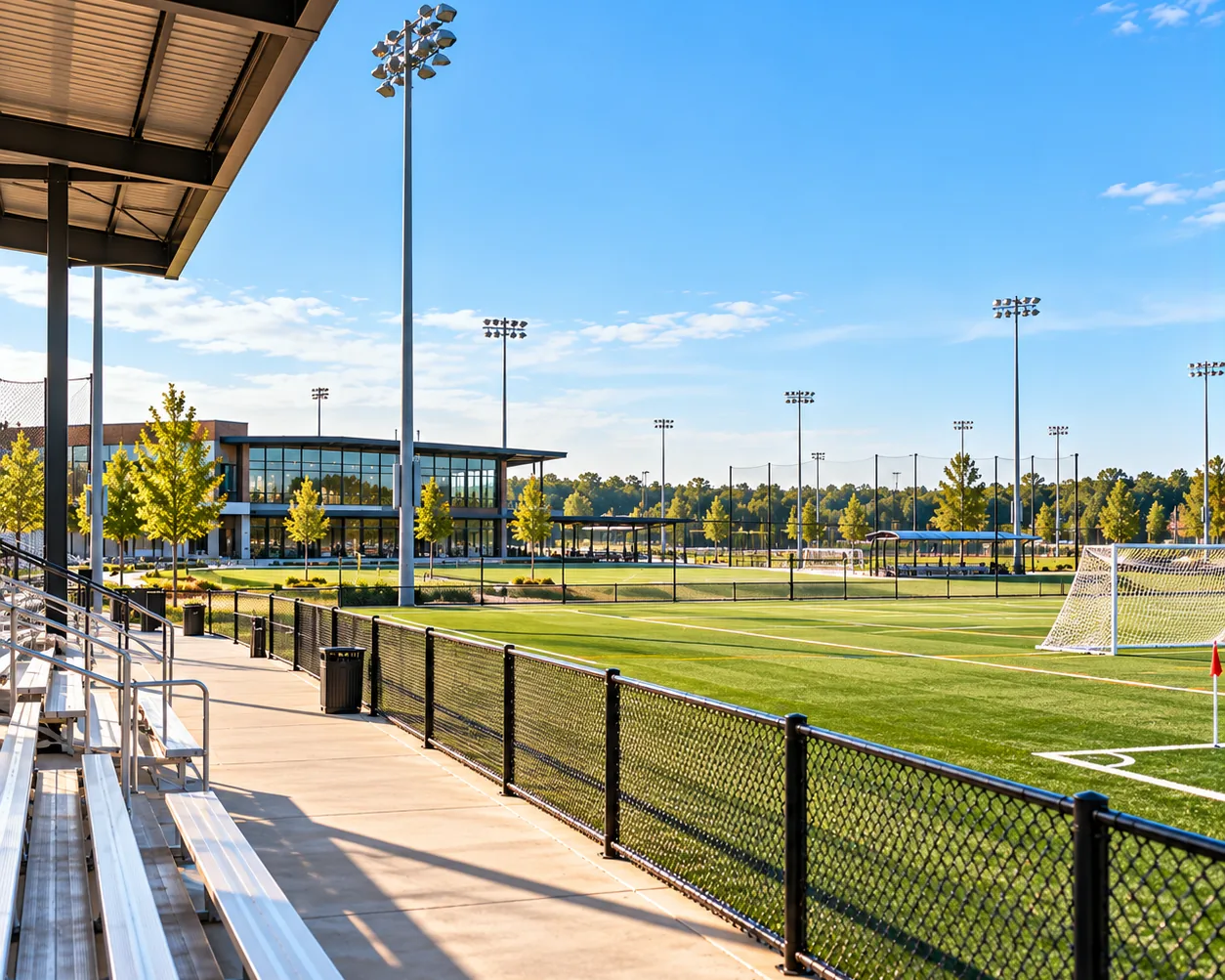
Every business in this sector sells participation, and participation is the thing the policy has to answer for.
A gym, a cheer gym, a dance studio, a golf course, an adventure park and a haunted house look nothing alike from the parking lot. Underneath, they carry the same core exposure: people come onto the property to do something physical, and some of them get hurt doing it.
Scale changes the size of that exposure but not its shape. A multi-sport complex has more visitors and more ways to be hurt than a yoga studio, and both are insured for the same reason. The building and the equipment are the assets; the participants are the risk.
Where claims in this sector actually come from.
Almost all of them start with a person, not a building.
- Participant injury is the business, not an edge case. Any activity carries a risk of injury to the people doing it, and in this sector that risk is the product. If someone is hurt at your facility and attributes it to your facility, you can be held liable, and inadequate limits are what turns a claim into a closure.
- Working with children raises a claim nobody plans for. Operations that teach or coach children and young adults are exposed to allegations of physical, sexual or mental abuse against staff or owners. Those allegations have to be defended regardless of merit, and the defense is typically expensive.
- The people who are not participating are also on the property. Spectators, parents waiting for a class, and bystanders outside the field of play are all exposed.
- Equipment is both the asset and the hazard. Poorly maintained equipment produces injury claims. Broken or faulty equipment produces cancelled sessions, rescheduled events and lost revenue. Specialized equipment that fails mechanically is a third problem again, and none of the three is answered by the same coverage.
- Closing is as expensive as being sued. A flood, a windstorm, a fire or a stretch of bad weather can shut a venue for hours, days or an entire season. A course that is unplayable or an attraction that cannot open still has bills, payroll and a lost gate.
The lines a participation business is built on.
A business owners policy combines commercial property and general liability, and for most operators here that is the base rather than the whole program.
- General liability. The core line: bodily injury and property damage arising from your premises and your operations, including the defense costs and any damages awarded. The limit is the decision that matters most, because it is what stands between a serious injury claim and the business.
- Accident medical expense coverage. Pays out-of-pocket medical expenses for a participant injured in the course of training, class or competition, without the claim having to establish that anyone was at fault. It sits beside liability rather than replacing it.
- Abuse and molestation liability. Defense costs and settlements for allegations of abuse. Written in wherever children or young adults are taught, coached or supervised.
- Commercial property and business personal property. The building, and separately the contents: mats, machines, mirrors, sound systems, office equipment, props and sets. For most operators the structure itself is the asset the business cannot operate without.
- Equipment breakdown. For operations that depend on specialized or mechanical equipment, where the failure is the machine's own rather than a fire or a theft.
- Business income and business interruption. Replaces revenue lost while you cannot open, and keeps paying the expenses that continue anyway. This is the line that matters most to weather-dependent and seasonal operations.
- Professional liability. For claims arising from instruction and advice: a member who suffers a health emergency or an injury and attributes it to what a trainer or instructor told them, and for operators who sell goods such as nutritional supplements, claims over the products themselves.
- Coverage for equipment you rent out. Renting ATVs, kayaks, bicycles, paddleboards, skates or clubs to the public puts your own property in someone else's hands. Renters liability coverage is what responds when rented equipment is damaged or lost.
- Liquor liability. Required thinking for any venue serving alcohol, at a clubhouse or during events. It responds to claims for harm caused by someone who was over-served, which can reach physical conflict, drunk driving and property damage.
- Workers' compensation. Instructors, coaches, grounds crew and actors get hurt on the job as readily as customers do, and teaching a physical activity is physical work. It is typically required by law.
- Business auto, plus hired and non-owned auto. Owned vans and course vehicles, and the staff and personal vehicles used on the business's behalf. Travel teams and off-site competitions are where this and general liability have to be checked together.
- Commercial umbrella, cyber and employment practice liability. Limits above the primary policies, protection against the financial losses that follow a data breach of member records and payment information, and defense for harassment, discrimination and wrongful termination claims.
Practical risk control belongs in the same conversation: posted warnings about equipment hazards, documented maintenance, and staff trained to handle an emergency all reduce what actually happens as well as what a claim looks like afterwards.
What changes from one venue to the next
The base program is similar across the sector. What differs is who the participants are, how severe an injury can be, and whether the revenue is seasonal.
Fitness centers and gyms
The members here are adults who mostly use the equipment unsupervised, which shifts the exposure onto maintenance and instruction. Injuries traced to inadequately maintained equipment, professional liability claims from a member who had a health emergency or injury and blames the advice a trainer gave, and product claims over nutritional supplements sold at the counter are the three that recur.
Dance studios
The building is the business, and a fire or water loss that closes the studio can end it, so property and business income sit at the front of the program. Teaching dance is physically demanding, so instructor injury is a live workers' compensation exposure alongside student accident coverage for the dancers themselves. The claim studios do not expect is the parent alleging discrimination or inappropriate behavior, which has to be defended even when it is unfounded, and recitals and off-site performances put students somewhere other than the insured premises.
Cheer and tumbling gyms
Tumbling and stunt work produce injuries at the severe end of the range, and the participants are mostly children and young adults with skill levels from novice to advanced. Accident medical expense coverage for out-of-pocket costs and abuse and molestation coverage for allegations against staff or owners are both core, not optional. A cheer gym is also rarely just a cheer gym: competitive dance, gymnastics, clinics and camps, yoga and exercise classes, birthday parties and open gym periods each need to be inside the policy.
Golf courses
The signature exposure is the errant ball: a mis-hit shot that injures a player or a spectator, or damages a vehicle or equipment. The course itself is insured property in a way a building is not, vulnerable to pests and disease, to a failed irrigation or sprinkler system, and to extreme weather bringing down trees, and the loss is not just the repair bill but the income from a course that cannot be played. Clubhouse alcohol service makes liquor liability a requirement rather than a consideration, and the grounds fleet, fuel and chemical storage carry their own auto and environmental exposures.
Adventure and entertainment venues
Adventure parks, amusement and theme parks, water parks and family entertainment centers are built to put participants at height, at speed or in water, so participant injury coverage is the foundation of the program. Most also rent out the equipment the experience depends on, ATVs, kayaks, bicycles and paddleboards, which exposes owned property to damage and loss in a customer's hands. The third distinctive risk is weather: a single flood or windstorm can stop operations for hours, days or weeks.
Haunted attractions and seasonal amusements
Haunted houses, hayrides and wagon rides, scare trails, mazes, drive-through attractions, escape rooms and zombie walks combine heavy foot traffic with darkness, close actor contact and guests who are deliberately startled, which is a falling and egress exposure as much as a general liability one. Property coverage has to reach props, sets and costumes, not just the building, and the operation is usually indoors and outdoors at once. Most of these businesses earn their year in a few weeks, so a closure for weather or damage is disproportionately costly.
Sports and recreation questions we hear most
Our participants sign waivers. Do we still need liability coverage?
Yes. A waiver is worth having and it does not stop a claim from being filed. Even when a suit fails, the legal costs of getting to that result are yours, and a serious injury claim can exceed what the business can absorb. The waiver and the liability limit do different jobs.
What is accident medical expense coverage, and is it the same as liability?
It is not the same. Liability responds when you are alleged to be responsible for an injury and pays defense costs and any damages awarded. Accident medical expense coverage pays out-of-pocket medical costs for a participant injured during training, class or competition without that question of fault having to be settled first. Programs with a high injury rate usually want both.
Are our athletes covered at away events and competitions?
Only if the policy is written to follow them. Students and teams competing off-site while representing your gym or studio are away from the insured premises, and so are recitals, clinics, camps and parties held somewhere else. That should be confirmed with the specific events in mind before the season starts.
What happens if weather or damage closes us for the season?
That is what business income and business interruption coverage is for. It can replace revenue lost while you are shut, and pay expenses that continue whether or not you are open. For seasonal and weather-dependent operations it is often the most consequential coverage on the policy, because the lost weeks cannot be made up later in the year.
We run more than one kind of activity. Does that change the policy?
It should. A facility that adds competitive programs, clinics and camps, birthday parties, open gym periods, alcohol service or equipment rental has added exposures that the original policy may not describe. The activities the policy names are the activities it responds to, so the list is worth reviewing whenever the operation changes.
- Contractors, Trades & Field Services
- Manufacturing & Distribution
- Energy, Oil & Gas
- Agriculture & Farm
- Transportation & Logistics
- Trucking Insurance
- Automotive Businesses
- Restaurant, Hospitality & Food Service
- Retail & Consumer Businesses
- Beauty, Salon, Spa & Personal Care
- Cannabis Insurance
- Medical, Dental & Veterinary Practices
- Senior Care & Residential Facilities
- Professional Services
- Technology & Digital Businesses
- Nonprofit, Community & Public Entity
- Real Estate, Property Owners & Lessors
Let's put the right policy in place.
Oxford Risk LLC is an independent agency. We represent you rather than a single carrier, which means we can place your coverage with the company whose appetite actually fits your risk. Tell us what you need to protect and an advisor will take it from there.
- Call (330) 315-3081
- Hours Monday - Friday: 8:00 AM - 4:00 PM
- Offices Fairlawn, OH, Cranberry Township, PA, Columbus, OH, Livonia, MI