

Contractors, Trades & Field Services Insurance
One core stack of coverage, and the exposures that change with the trade.
From a one-person shop to a contractor with a fleet, a yard and a payroll.
The program changes with scale, scope and how much of the work is subcontracted, not with the label on the door of the truck. Two businesses in the same trade can need very different policies if one frames buildings and the other refinishes kitchens.
- General contractors and the subcontractors under them, where liability for damage a subcontractor causes can land on the contractor who hired them.
- Single-vehicle operators and one-person shops, which are still businesses carrying a business's exposures.
- Contractors running the operation out of a house, where a homeowners policy will not answer for stored tools and inventory, deliveries, or a client on the property.
- Field service businesses with no construction trade at all: janitorial crews, pest control routes, security guard posts, alarm monitoring centers.
- Contractors bidding government and public work, where proof of general liability is a condition of bidding.
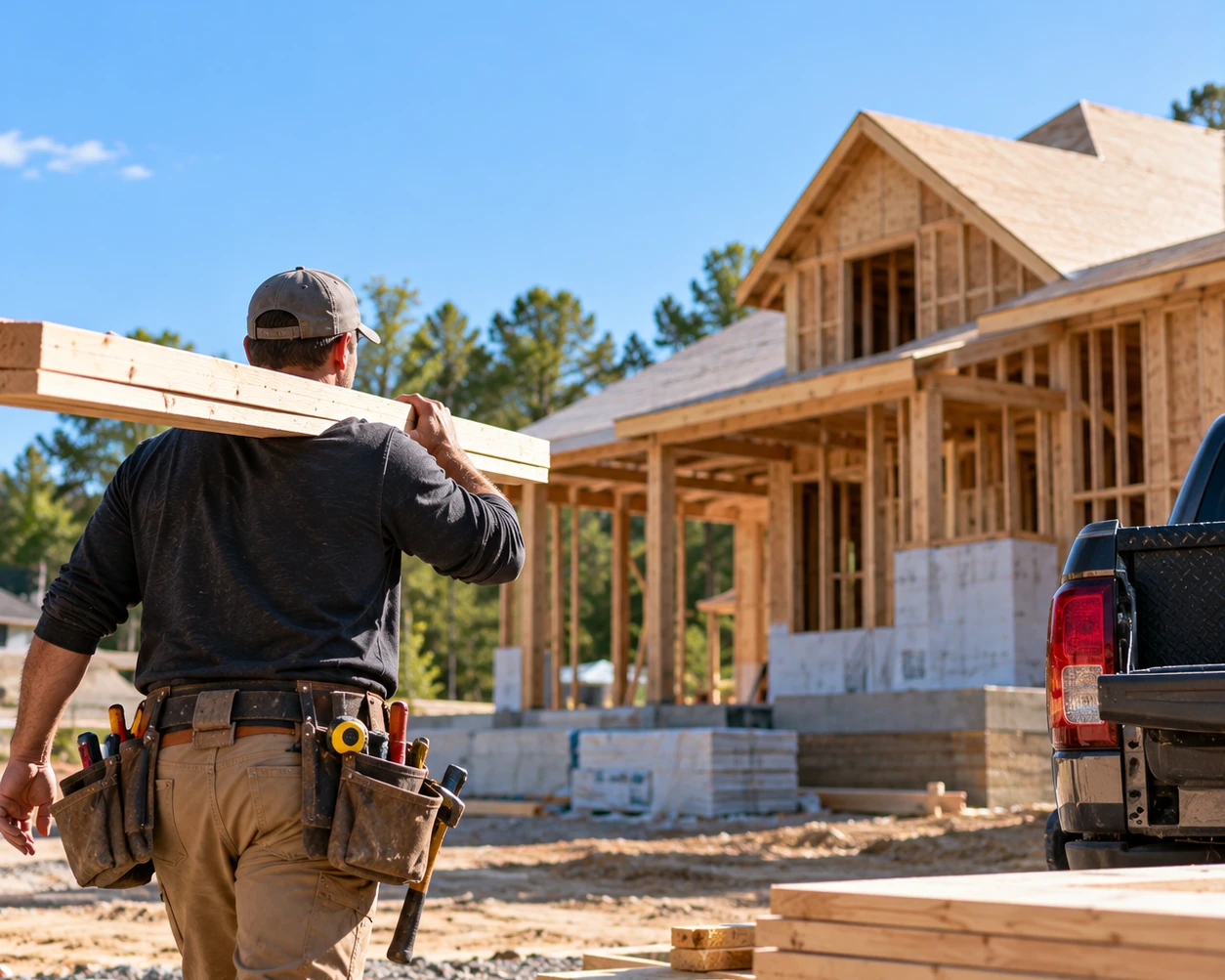
Contracting risk does not stay put. It sits on property you do not own, it travels in a truck, and it outlives the final invoice.
A contractor program is assembled from separate coverages rather than bought as one package, and that is what lets a one-truck trim carpenter and a mechanical contractor with a fleet and a yard use the same structure without either paying for the other's exposures.
What the trades on this page share is a shape. The work is performed on premises belonging to a client. Tools, materials and machinery spend part of every day in transit. The crew does physical work at height, in a trench or on a roof. And liability for the finished work continues after the crew has gone.
Where contractor claims actually come from.
The same handful of exposures produces most of the losses across every trade on this page.
- The work happens on someone else's property. A dropped tool, a coil of cable left across a walkway, a stained wall, a cracked patio: because the job site belongs to the client, these become third-party bodily injury and property damage claims rather than damage to your own things.
- The exposure does not end at the final invoice. Completed operations answers for injury or damage caused by work already finished: a stair tread that breaks, a structure that does not hold, a system that fails to function when it is needed. It is usually inside the general liability policy rather than alongside it, which is exactly why it is worth confirming instead of assuming.
- Everything valuable is in motion. Tools, materials and machinery move between shop, truck and site daily. Commercial property coverage generally responds at your own premises, inland marine follows the items in transit, and property staged on a project may sit under the general contractor's builders risk, which is not the same thing as your own coverage.
- Job sites draw people nobody hired. A member of the public can wander onto an active site, and so can an employee of another contractor working the same project. An open site can also be treated as an attractive nuisance, which means an injury to someone trespassing can still come back to the contractor who controls it.
- Pollution is generally excluded from general liability. Fuel spills, chemical runoff, released refrigerant, sewage, and asbestos or lead-based paint disturbed during a remodel all fall outside a standard liability policy. Where a trade touches any of them, environmental impairment or pollution coverage is a separate decision rather than an assumed one.
- Auto is one of the largest lines in the stack, not a small one. Crews drive constantly and usually haul equipment, and heavy trucks do more damage in a collision than passenger vehicles do. Owned vehicles need a business auto policy, and employees driving their own cars or vehicles rented for a job need hired and non-owned coverage behind them.
- The crew is the claim. Falls from height, chainsaws, trench collapse, heavy equipment and repetitive lifting are why workers' compensation is both mandatory in most places and the line most sensitive to how the work is actually performed. Carriers may credit a documented safety program.
- Employees hold keys. Crews work unsupervised, frequently after hours, inside client homes and businesses. Theft of a client's property or materials by an employee is a crime and employee dishonesty exposure, and a general liability policy is not written to answer it.
The lines a contracting program is built from.
Most of these are decisions rather than defaults, and the ones contractors regret are almost always the ones left off to hold a premium down.
- General liability, and what it is read against. Beyond injury and damage, the limit is often dictated by the contracts you sign and the public work you bid. Confirm that products liability sits inside the form, since a claim can arise from the material you installed rather than the way you installed it.
- Completed operations. Verify that it is actually part of the general liability policy rather than assumed. For life-safety trades in particular it is the coverage that responds when an installed system does not do its job.
- Property, tools, equipment and inland marine. Commercial property covers the shop, office, yard or storage facility and everything in them, and equipment breakdown answers machinery that stops from accidental physical damage rather than an outside peril. For everything that leaves the building, decide where each item is covered: at your premises, in the vehicle, and on a job site you do not control. The seam between those three is where uninsured equipment losses happen.
- Business auto, including hired and non-owned. Rate the fleet for what it is. Alongside pickups and vans there may be dump trucks, mixer trucks, roll-off trucks, log trucks, riding mowers, excavators and trailers, and a vehicle that is also a piece of machinery does not fit a policy written for company cars.
- Workers' compensation in every state you work. Classification, rate and statutory requirement all follow the state where the work is performed, and job site locations belong on the policy rather than in the office file.
- Professional liability where judgment is part of the service. Design, specification, inspection, monitoring, reporting and diagnosis are not covered by a liability policy written for accidents. Alarm, fire protection, pest control, security guard, mechanical, concrete and marine work all carry some version of this exposure.
- Commercial umbrella. It sits over general liability, business auto and in most cases several other lines, and it is how a trade with ordinary underlying limits answers a claim that runs past them.
- Environmental and pollution. A live decision for any trade handling fuel, solvents, refrigerant, sewage, herbicide or pesticide, for demolition and remodeling work that disturbs asbestos and lead, and for excavation and marine work where a release reaches soil or water.
- Business income and off-premises utility services. Income coverage replaces revenue when the shop cannot operate. Off-premises utility services coverage extends that to a utility failure away from your own premises, which is a practical scenario for any trade that cannot work without power.
- Crime, employee dishonesty, and care, custody and control. Crews inside client property create two exposures a liability policy is not built for: theft of the client's property, and damage to property temporarily placed in your care rather than simply belonging to someone else.
- Builders risk. Also called course of construction, it covers the work in progress and the material staged for it. It can be an inland marine endorsement or a standalone policy, and where the general contractor carries it, what it extends to is worth reading rather than assuming.
Across all of these lines, cost tracks payroll, the specific trades performed, the composition of the fleet, the states worked in, and the scale and type of projects taken on.
The trades and field services we place.
Each of these buys the same core stack, and each has at least one exposure none of the others carry. Those differences are what the program should be built around.
Electrical contractors
Faulty electrical work shows up as a fire or an electrocution, often long after the job closed, so completed operations liability and an umbrella above the general liability limit carry unusual weight here. Electricians are also the trade most likely to lose their own working days to an area power failure, which is what off-premises utility services coverage answers.
Plumbing contractors
A plumbing failure keeps causing damage after the crew leaves: a fitting behind a finished wall goes on soaking the customer's building and contents, which is why liability and completed operations matter here far more than the modest value of the tools. Sewage, fuel and oil releases fall outside general liability, so environmental coverage for hazardous spills and leaks is a real decision rather than a formality.
HVAC contractors
An HVAC program has to separate installation from ongoing service, because a newly installed system carries a completed operations and product exposure while a service agreement creates a continuing duty to a building the contractor does not own. Refrigerant is a regulated substance to handle and transport, which puts an environmental question in front of a trade that otherwise looks like straightforward mechanical work.
Mechanical contractors
Mechanical work reaches past comfort systems into process piping, plant equipment and whole building systems, so the exposure is set by the scope of the installation rather than the size of the crew. Errors and omissions liability matters because the claim is frequently an error in the work itself, including breach of contract, rather than an accident on site. Completed operations answers negligence alleged after the project closes, and is generally written inside the general liability policy.
Excavation contractors
Excavation is the trade where one pass of a bucket can strike a gas, water, electric or communications line, and the resulting loss is routinely larger than the contract that put the machine there, which is why standard general liability limits are often too low without a commercial umbrella over them. Fuel spills across open ground and damage from heavy equipment traffic point at environmental impairment coverage. An open excavation is also a premises liability problem: the public wanders in, other contractors work alongside, and an unsecured site can be treated as an attractive nuisance.
Masonry contractors
Masonry crews work from scaffolding, so the workers' compensation exposure is a fall exposure, and the same scaffold that carries the crew can drop material onto people and property below. Clients expect the structure to stand for decades, which makes completed operations the coverage that answers a failure traced to workmanship or inferior material. Builders risk covers the wall while it is going up.
Concrete contractors
A concrete pour cannot be undone: if the mix, the forms or the placement are wrong, the remedy is demolition and replacement, and the fault may lie in the material rather than in anything the crew did. That puts professional liability alongside completed operations, because the claim is about defective work rather than an accident on the site. The fleet runs from crew and equipment trucks to a mixer truck, so business auto has to be rated for vehicles that are effectively machinery.
Carpenters
Carpentry covers work with very little in common: a framer or joister installing structural supports carries a collapse exposure, while a trim carpenter, finish carpenter or cabinetmaker is mostly exposed to damaging an occupied home. Completed operations is the specific concern, because the claim tends to arrive later as a staircase tread that breaks or structure that fails.
Drywall contractors
Hanging and finishing drywall fills an occupied building with dust, and the same crews taking down walls and ceilings during a remodel disturb lead-based paint and asbestos in older structures, neither of which general liability covers. Environmental impairment liability is the line that answers cleanup and the harm those releases cause. Access is the other distinctive exposure: crews are inside client homes and businesses, so crime and employee dishonesty coverage belongs in the program.
Flooring contractors
Flooring is installed into a finished and usually occupied space, so accidental damage to the customer's property is the routine claim, and a showroom adds ordinary visitor liability at the contractor's own premises. Because a loss can originate in the material rather than the installation, product liability needs to be confirmed inside the general liability policy.
Roll-off contractors
A roll-off container is set down on someone's driveway, lawn or lot and dragged back onto the truck, and that placement is where most of the property damage happens. Loaded roll-off trucks are heavy enough that a collision causes more severe damage and injury than a smaller vehicle would, so business auto is a dominant line here. Containers that pick up hazardous material can leak or spill in an accident, and a logistical error that stalls a construction site is a financial loss claim that professional liability answers, not general liability.
Alarm contractors
The worst claim against an alarm contractor is a system that did not do its job: an installed or monitored alarm fails and a theft, fire or water loss runs its course without anyone being warned. That is a failure to perform, which professional liability and errors and omissions liability answer rather than general liability. Installers also spend their days inside customer premises with equipment in hand, and monitoring operations hold secure customer information, which brings crime and cyber liability into the same program.
Fire protection contractors
Fire protection work has almost no room for error, and the consequence of one is major damage, serious injury or death, so professional liability sits beside general liability rather than behind it. The claim usually arrives after the project is closed, when the installed system malfunctions, which makes completed operations the coverage to verify rather than assume.
Defense contractors
A defense contractor's product or service is often part of a system somebody's life depends on, so errors and omissions liability for a defective product or a contract not properly performed is the central line rather than an add-on. Any business employing workers outside the United States on a U.S. government contract needs Defense Base Act coverage, a federally mandated form of workers' compensation. Government work also makes a business a deliberate target, which is why cyber liability and kidnap, ransom and extortion coverage appear here and almost nowhere else in the trades, and equipment sent around the world needs inland marine over land and ocean marine over water.
Marine contractors
Marine contracting is performed from vessels, and a general liability policy written for land-based work does not fit it: marine general liability is what accounts for operations conducted from a watercraft and the damage they can do to the property of others. The vessel itself needs hull and protection and indemnity coverage for collision, accident and severe weather. A fuel or chemical release on the water reaches plants, animals and the people downstream of it, and heavy equipment on an unsteady deck makes the workers' compensation exposure worse than the same work performed ashore.
Landscaping services
Nearly all landscaping work happens on the client's property, where a crew can damage a patio or deck, a client can trip over equipment left on the lawn, and herbicide can spill or injure someone. The fleet mixes pickups and trailers with dump trucks, riding mowers and excavators, and an installation floater covers plant material and hardscape being installed before it becomes part of the property. Seasonal crews working across many locations in a day make workers' compensation classification and job site reporting a live issue.
Arborists and tree services
Tree work combines height with chainsaws, so the workers' compensation exposure has to be rated for climbing rather than for grounds maintenance. The signature liability claim is a heavy limb or a felled trunk that gets away and lands on the client's house, and for crews who are not certified arborists general liability carries even more weight, because damage traced to a judgment error is the likely claim.
Pest control
Pest control turns on reading evidence correctly, and missing the signs of a termite or rodent infestation is a professional error, so errors and omissions liability is what answers the damage that follows. The chemicals themselves create a pollution exposure, both on an accidental spill and in ordinary application, which is a separate environmental coverage. Clients also hand the property over during fumigation, so damage to a house and its contents while it is temporarily in the contractor's care needs care, custody and control coverage, a specific gap in general liability.
Janitorial services
Cleaning crews are inside client buildings, often after hours and often alone, working directly on and around property that belongs to the client, which is the care, custody and control exposure general liability is not written to answer. Chemicals and solvents create problems of their own: air quality from mixing, spills that need specialized cleanup, runoff into soil and water, and mold, asbestos or lead released while working on site.
Security guard services
The most common claim against a guard service is an assault and battery suit alleging excessive force, followed by false arrest, and neither resembles the bodily injury claims the rest of these trades bring. Failure to perform the guard's duties, including inaccuracies in reporting, is a professional liability matter, while a client's property damaged because an area was not secured runs through general liability. Whether guards are armed or unarmed, and whether the post is a vacant building or an event with thousands of people, changes the exposure more than the size of the company does.
Logging
Logging pairs felling work with heavy specialized equipment, skidders, feller bunchers and loaders, on remote sites where help is a long way off, which makes workers' compensation the largest single line in the program. That equipment is often in transit across the site or stored away from the business location, so inland marine covers it in motion and systems breakdown answers when a machine stops from accidental physical damage. Log trucks hauling timber, mulch and pulp are a distinct auto exposure, and the environmental scrutiny the industry operates under makes pollution coverage a practical part of the program.
Contractor questions we hear most
Is completed operations coverage already part of my general liability policy?
For most contracting classes it is written inside the general liability form rather than sold separately. It is still worth confirming, because it is the coverage that answers a claim arising from work you already finished, and it is the one contractors most often assume they have.
Are my tools covered if they are stolen out of the truck?
Commercial property coverage generally responds to items at your own premises, and inland marine is what follows tools, materials and equipment in transit. Items sitting on a job site are a third case: they may fall under the general contractor's builders risk rather than your own policy, so it is worth tracing coverage across all three places your equipment spends its time.
Do I need business auto if my employees use their own vehicles?
Your business can be held liable for an accident an employee causes while working for you, and that does not change because the vehicle belongs to them. Hired and non-owned auto coverage is what responds to vehicles you neither own nor title, including ones you rent for a specific job.
Does general liability cover a fuel spill or a chemical release?
No. Pollution is generally excluded from a general liability policy. Trades that handle fuel, solvents, refrigerant, sewage, herbicide or pesticide, and trades whose demolition work disturbs asbestos or lead, need environmental impairment or pollution coverage as a separate decision.
I take work in more than one state. Does that change my workers compensation?
It can. Requirements, classifications and rates follow the state where the work is performed, so the carrier needs to know every state you actually send crews into rather than only where your office is located.
I am a one-person shop working out of my house. Do I still need a commercial policy?
Yes. A homeowners policy is not written for business tools and inventory kept at the house, business deliveries, or a customer on the property, and liability arising out of work you perform elsewhere sits outside it entirely. A business owners policy, which combines commercial property and general liability, is the usual starting point.
- Manufacturing & Distribution
- Energy, Oil & Gas
- Agriculture & Farm
- Transportation & Logistics
- Trucking Insurance
- Automotive Businesses
- Restaurant, Hospitality & Food Service
- Retail & Consumer Businesses
- Beauty, Salon, Spa & Personal Care
- Sports, Fitness & Recreation
- Cannabis Insurance
- Medical, Dental & Veterinary Practices
- Senior Care & Residential Facilities
- Professional Services
- Technology & Digital Businesses
- Nonprofit, Community & Public Entity
- Real Estate, Property Owners & Lessors
Let's put the right policy in place.
Oxford Risk LLC is an independent agency. We represent you rather than a single carrier, which means we can place your coverage with the company whose appetite actually fits your risk. Tell us what you need to protect and an advisor will take it from there.
- Call (330) 315-3081
- Hours Monday - Friday: 8:00 AM - 4:00 PM
- Offices Fairlawn, OH, Cranberry Township, PA, Columbus, OH, Livonia, MI