

Trucking Insurance
Bigger vehicles, federal filing requirements, and a load in the trailer that the vehicle policy does not pay for.
Operations where the truck is the business.
This is written for motor carriers and truck operators rather than for a business that happens to own a van. The specialized classes are where a general commercial auto policy runs out first.
- Tractor-trailer operations, from a single owner operator to a fleet running regular lanes.
- Tow and recovery operators, who take custody of vehicles belonging to other people.
- Flatbed haulers, where the load is secured in the open rather than enclosed.
- Tank truck operators, where what is inside the tank changes the exposure as much as the truck does.
- Box truck and straight truck operations running local and regional freight.
- Garbage and refuse trucks working residential and commercial routes with constant stops.
- Any operation crossing state lines or national borders, where filing and jurisdiction questions arrive with the route.
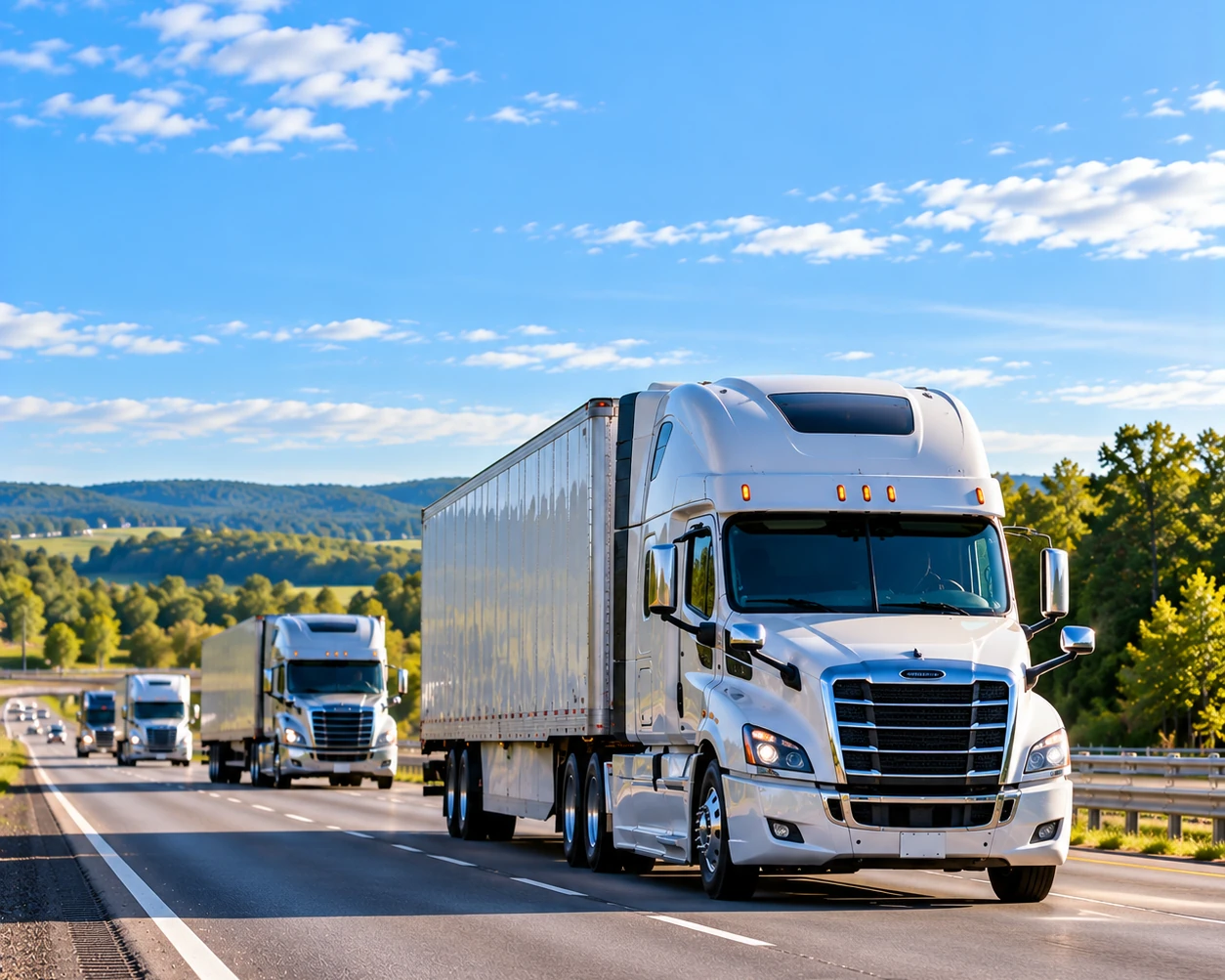
Trucking is the one transportation class with its own federal rulebook, and the policy has to satisfy that before it protects anything.
Compared with ordinary commercial auto insurance, a trucking policy has to cover not just bigger risks but a wider range of them. A truck can do far more damage in a collision, so the property damage and medical costs behind a single loss start higher. On top of that sits the cargo, which is the part of the operation a liability policy was never written to pay for.
The principles are straightforward. The underwriting is not. Expect detailed questions about the people operating the trucks, the type of cargo they carry, and the mileage you expect to run in a year, because those three answers shape most of the policy. Coverage needs change again once your routes cross into other jurisdictions.
Where trucking claims get expensive.
Severity, not frequency, is what shapes a trucking program.
- One collision can outrun the limit. A single accident produces property damage and medical treatment on a scale a passenger auto claim rarely reaches, which is the argument for setting the liability limit against what the equipment is capable of rather than against the size of the fleet.
- The freight is not covered by the truck's policy. Liability answers for the harm you cause others. Physical damage answers for the tractor and trailer. Neither pays for the load. Motor truck cargo is the coverage that responds when freight in your custody is lost, damaged or stolen, and the limit has to reflect the most valuable load you actually haul rather than a typical one.
- Specialized equipment does not fit a general form. Tow trucks, tank trucks, flatbeds and refuse trucks all do work a standard commercial auto policy was not drafted around. Coverage written for the specific class is what closes the gap between the vehicle schedule and what the vehicle spends its day doing.
The lines a trucking program is built from.
Most trucking policies draw on the same handful of coverages, weighted by equipment, cargo and operating authority.
- Commercial trucking liability. The core coverage, and the one with no practical ceiling on a claim. It answers for bodily injury and property damage the truck causes, and it is the coverage the federal filing is made against.
- Physical damage. Collision and comprehensive for the tractor and trailer, subject to the deductible you choose. How the equipment is valued in the policy matters as much as whether it is scheduled at all.
- Motor truck cargo. Coverage for the freight itself while it is in your care. What you haul decides the form, and the commodity matters as much as the value.
- Uninsured and underinsured motorist liability. For losses caused by drivers carrying nothing or not enough, which in trucking usually means injuries to your own people.
- Government filings. Proof of financial responsibility filed with the regulator on your behalf and carried by the MCS-90 endorsement. Confirm the policy provides for the filings your authority requires, because it is a filing rather than a coverage and not every market will make it.
- What moves the premium. Who drives and what their records look like, the commodity carried, expected annual mileage, the equipment on the schedule, the jurisdictions you run in, and the limits and deductibles chosen. Credits exist for commercial driver's licensing and for an established operating history.
Trucking questions we hear most
Is a commercial auto policy enough for a truck?
Usually not. Commercial auto is written around ordinary business vehicles. A truck raises the severity of every liability claim, adds cargo as a separate exposure the auto policy does not address, and, for interstate work, brings federal filing requirements a standard policy may not be set up to satisfy.
What is an MCS-90 and do I need one?
It is the endorsement used to show the federal regulator that an interstate motor carrier has the required financial responsibility in place. It obligates the insurer to pay a judgment for public liability arising from negligent operation of a motor vehicle even where the policy would not otherwise have paid, with the carrier required to reimburse the insurer. It is a filing rather than a coverage, and it does not change what the policy protects you against.
Are there credits available on a trucking policy?
There can be. Discounts may be available on factors such as your staff holding commercial driver's licenses, or the operation being well established. They sit alongside the underwriting rather than replacing it, so the driver and cargo answers still carry the premium.
We run tankers and flatbeds. Does the equipment change the policy?
Yes. Specialised equipment does not fit a general form. On a flatbed the load is secured in the open rather than enclosed, and on a tank truck what is inside the tank changes the exposure as much as the truck does, so the coverage is built around the equipment and the work rather than the vehicle alone.
- Contractors, Trades & Field Services
- Manufacturing & Distribution
- Energy, Oil & Gas
- Agriculture & Farm
- Transportation & Logistics
- Automotive Businesses
- Restaurant, Hospitality & Food Service
- Retail & Consumer Businesses
- Beauty, Salon, Spa & Personal Care
- Sports, Fitness & Recreation
- Cannabis Insurance
- Medical, Dental & Veterinary Practices
- Senior Care & Residential Facilities
- Professional Services
- Technology & Digital Businesses
- Nonprofit, Community & Public Entity
- Real Estate, Property Owners & Lessors
Let's put the right policy in place.
Oxford Risk LLC is an independent agency. We represent you rather than a single carrier, which means we can place your coverage with the company whose appetite actually fits your risk. Tell us what you need to protect and an advisor will take it from there.
- Call (330) 315-3081
- Hours Monday - Friday: 8:00 AM - 4:00 PM
- Offices Fairlawn, OH, Cranberry Township, PA, Columbus, OH, Livonia, MI