

Cannabis Insurance
A licensed industry in a narrow insurance market, where the policy conditions matter as much as the limits.
Every licensed link in the chain, from the grow to the counter.
The sector spans cultivation, processing, testing, distribution and retail. Those are genuinely different risks sharing one regulatory frame, and a policy written for one end of the chain rarely sits correctly over the other.
- Cultivators, where the value at risk is a growing crop rather than finished stock.
- Manufacturers and processors, turning raw material into a finished product that carries its own liability.
- Testing laboratories.
- Distributors, whose exposure is in transit rather than at a fixed address.
- Dispensaries and retailers, with customers on the premises and inventory behind the counter.
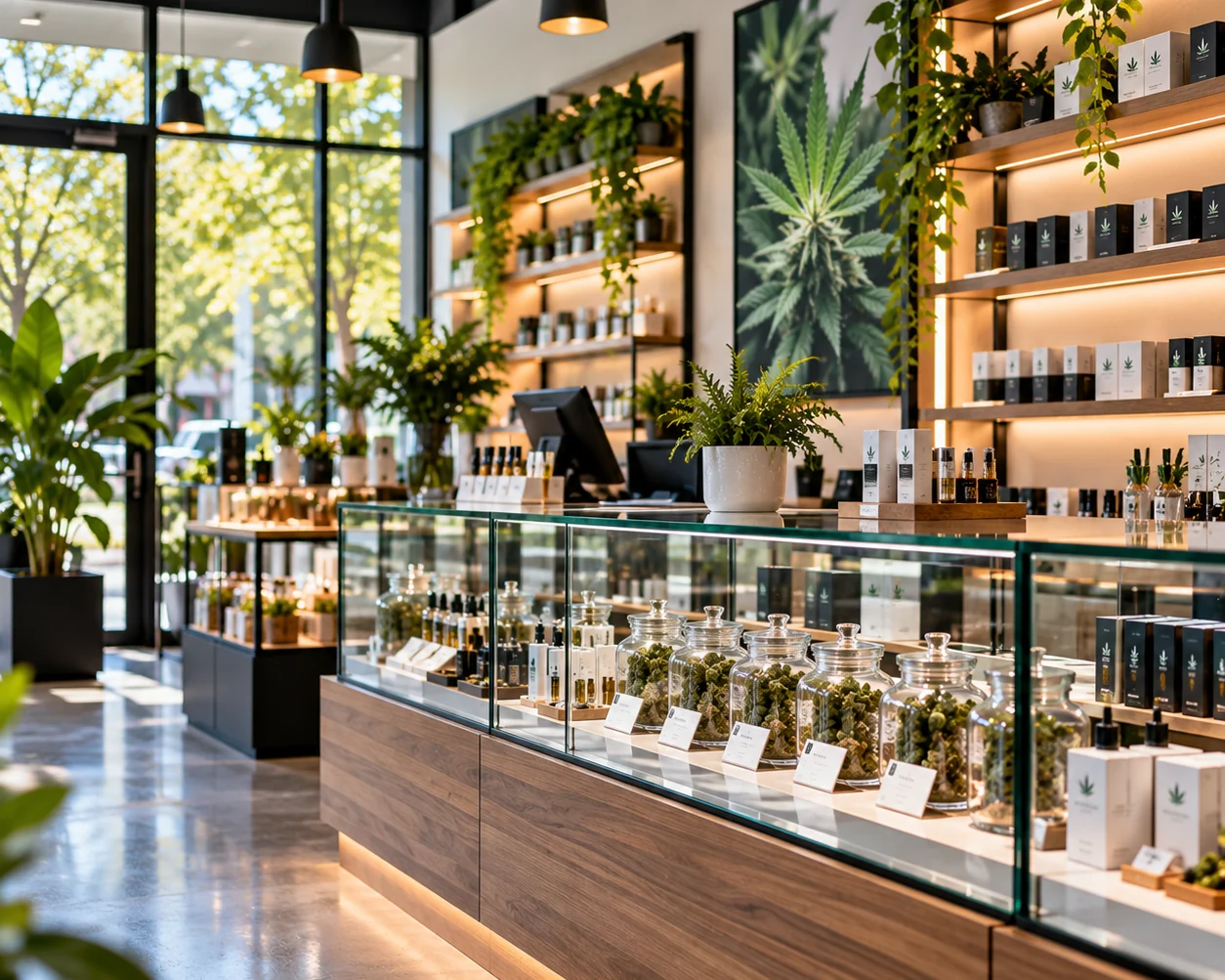
Cannabis businesses are businesses, but the market that insures them does not behave like the one that insures everyone else.
Legal cannabis is a new and still controversial sector, and operators find real benefit in policies written for the industry rather than adapted from another one. Ohio has legalised adult use, so the operating side of these businesses now looks much like any other regulated consumer industry: a facility, a product, inventory moving between sites, and customers on the premises.
What stays unusual is the insurance. This is a narrow market, so the wording of the policy carries more weight than it would elsewhere. Conditions around licensing and compliance, and the difference between medical and recreational operations, are frequently what decides whether a claim is paid.
Where cannabis losses actually happen.
Property, product and policy conditions, in roughly that order.
- Fire and theft at the site. As with any business, the property has to be protected against damage and loss. Theft deserves particular attention in an industry that holds a high value consumer product in known locations, and the coverage should reflect the stock actually on hand rather than a nominal figure.
- Product in transit is a separate question. Check carefully that products are covered while they are moving, for example between a cannabis farm and a storage facility. Coverage written for a location does not follow a shipment, and the handover between sites is where responsibility is easiest to lose track of.
- Raw material cost is not the loss. A policy that pays the cost of the raw materials can still leave the business well short of what the event cost it. Coverage that pays out for lost income and profits is what reflects the actual loss when a crop or a batch is destroyed.
- People come to the facility. Cultivation facilities, laboratories and retail floors all put visitors alongside equipment, product and process, and a visitor who is injured on your site has a claim against you.
The lines a cannabis program is built from.
A short list, and every item on it has a condition or a definition worth reading closely in this industry.
- Commercial property. The building, the equipment and the stock, against risks such as fire and theft.
- Coverage for product in transit. Written so product is protected while it moves between sites, not only while it sits at one of them.
- Lost income and profits. Coverage that pays out on what the business would have earned, rather than only the cost of the raw materials destroyed.
- General liability. For incidents such as a visitor to your facility being injured.
- Product liability. Responds if you are sued over the product you produced or sold.
- Licensing and compliance conditions. Not a coverage but a requirement inside one. Read what the policy asks of you, and note that the conditions for medical cannabis may differ from those for recreational cannabis.
Cannabis questions we hear most
Is cannabis insurance really different from ordinary business insurance?
The coverages have familiar names, but the market and the wording are not ordinary. This is a narrow market, and an industry specific policy is written with cannabis operations in mind rather than adapted from a general form where the product may not be contemplated at all.
Does it matter whether we are medical or recreational?
Yes. Insurance conditions for medical cannabis may differ from those for recreational cannabis, and it is often a condition of the policy that you comply with all local laws, regulations and licensing. Both are worth checking line by line rather than assuming they carry across.
Our product moves between the grow site and the dispensary. Is that covered by the property policy?
Property coverage is written for a fixed address, so product in transit is a separate question with its own coverage. For a distributor in particular, the exposure is in transit rather than at a location, which is why it is arranged deliberately rather than assumed.
If a fire destroys a crop before harvest, how is the loss valued?
The cost of the raw material is rarely the size of the loss. What the business loses is the finished value it was going to realise, plus the income it cannot earn while it rebuilds, which is why lost income and profits are treated as their own coverage alongside the property itself.
- Contractors, Trades & Field Services
- Manufacturing & Distribution
- Energy, Oil & Gas
- Agriculture & Farm
- Transportation & Logistics
- Trucking Insurance
- Automotive Businesses
- Restaurant, Hospitality & Food Service
- Retail & Consumer Businesses
- Beauty, Salon, Spa & Personal Care
- Sports, Fitness & Recreation
- Medical, Dental & Veterinary Practices
- Senior Care & Residential Facilities
- Professional Services
- Technology & Digital Businesses
- Nonprofit, Community & Public Entity
- Real Estate, Property Owners & Lessors
Let's put the right policy in place.
Oxford Risk LLC is an independent agency. We represent you rather than a single carrier, which means we can place your coverage with the company whose appetite actually fits your risk. Tell us what you need to protect and an advisor will take it from there.
- Call (330) 315-3081
- Hours Monday - Friday: 8:00 AM - 4:00 PM
- Offices Fairlawn, OH, Cranberry Township, PA, Columbus, OH, Livonia, MI