

Landlord and Rental Property Insurance
Coverage for property somebody else lives in, works in or stores things in: rentals, investment property, associations, commercial space, parks and storage.
Owners, associations and the people who manage for them.
The buyers below are not variations on one another. An association board, a commercial lessor and a fee-based property manager carry genuinely different exposures, and the policy has to be built around which one you are.
- Landlords with a single rental house or a portfolio of units.
- Real estate investors who buy, renovate, hold and sell.
- Owners renting a home short term through a platform such as Airbnb or Vrbo.
- Condominium and homeowners association boards buying a master policy.
- Owners of office buildings and other commercial space leased to business tenants.
- Mobile home park owners, where the land and the infrastructure are yours and the homes often are not.
- Self-storage facility operators.
- Property managers, who are responsible for buildings they do not own.
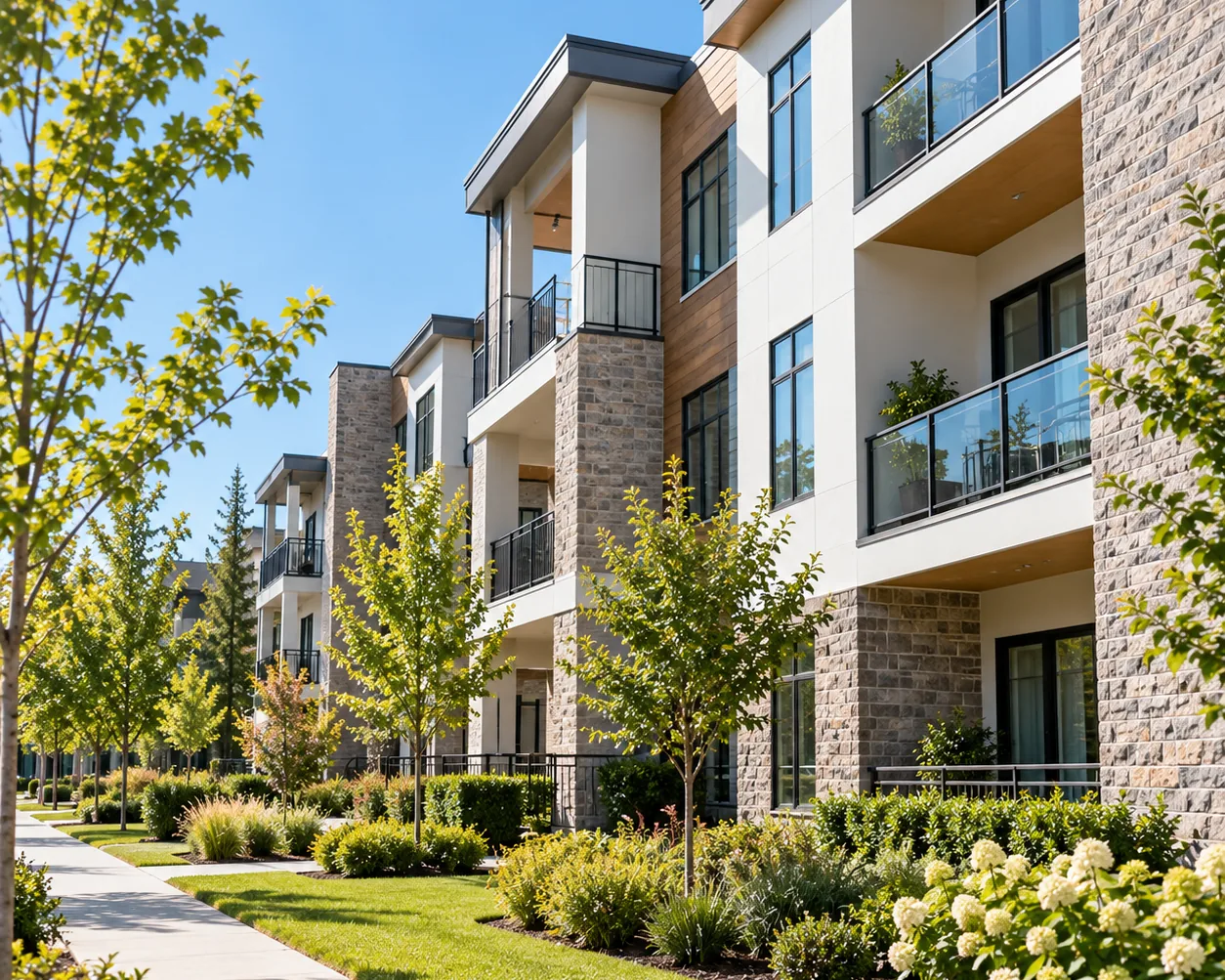
Everyone on this page is insuring a building they do not occupy themselves.
Properties vary so widely that an off-the-shelf package is rarely the right fit. Location, the specifics of the building, and the number of dwelling units all change what the policy has to do. What stays the same is the shape of the problem: you own the structure, someone else uses it, and the income depends on them continuing to.
A rental property policy is a specialty form written for the owner rather than the occupant. It resembles a home policy in outline, but it accounts for risks a homeowner never has, and it goes well beyond a home policy on the liability side once you are renting to others.
Where property owner claims actually come from.
The situations that reach the policy, and the ones that quietly do not.
- The rent stops and the mortgage does not. Even after thorough credit and background checks a tenant can default. Removing them and finding a replacement can take months, and the loan payment is due the whole time.
- A vacant building is a different risk than an occupied one. Vacancy happens between tenants and during renovation. A burst pipe or a fire in an empty building may not be found until the damage is severe, and an existing policy may restrict or exclude coverage once a property has been uninhabited for a period.
- Someone is injured on the part of the property you control. Hallways, elevators, stairwells, parking areas, sidewalks, pools, laundry rooms and playground equipment are yours. So is the injury that happens on them, including an injury during something as ordinary as an evacuation. The more people who live in or visit the property, the more often this comes up.
- A loss that damages the building also stops the income. A fire started by one tenant can put a unit or a whole suite out of service for months. The repair is one claim; the rent that was not collected during it is a separate coverage that has to be on the policy. Equipment failure does the same thing without any fire: a failed HVAC system or boiler can make space unrentable.
- You are sued over who you rented to, what you charged, or how you handled it. Allegations of discrimination, harassment or improper practices can come from tenants, applicants, vendors and employees. Merit is not the gate. The claim has to be defended either way, and defense costs accumulate before anyone decides whether the allegation was sound.
The lines a property owner ends up buying.
Not every owner needs every one of these. Which ones apply depends far more on the type of property than on its size.
- Commercial property. The building and the contents you own. Site improvements are easy to forget and have to be scheduled deliberately.
- General liability. Injury and property damage claims from tenants, residents, guests and vendors on the property you control, including legal costs as well as damages.
- Loss of rents and business income. Replaces the rental revenue a covered loss takes away while units cannot be occupied, and can reach the cost of moving a tenant out and back in during repairs and compensation owed if heating or air conditioning is knocked out. For an owner whose properties are the livelihood, this is closer to the center of the policy than the building coverage is.
- Building code upgrade coverage. Pays the additional cost of bringing a repaired or rebuilt structure up to current building codes rather than back to what was there.
- Equipment breakdown. Repair or replacement of expensive building systems such as HVAC, boilers and climate control equipment, and the resulting damage when they fail.
- Flood, and where relevant earthquake and hurricane. Flood is not part of a commercial property or business owners policy and has to be bought separately. Earthquake and hurricane coverage follow the same pattern where the location calls for them.
- Errors and omissions, and tenant discrimination. For anyone paid to exercise judgment over property, and for claims about whom you rented to, what you charged and what conditions you set.
- Directors and officers, and crime. Association boards are exposed to claims of wrongdoing in how they govern, and D&O responds to the personal assets of the board members. Crime coverage answers for theft by a third party or by an employee, including an employee who steals from a resident or a storage tenant.
- Cyber liability. Tenant and member records, rental applications and online payments all sit on your systems. A breach exposes personal information you collected, which is a liability rather than a property loss.
- Employee coverages. Workers compensation for maintenance and office staff, employment practices liability for hiring and employment claims, and business auto for vehicles used to run between properties, including employees driving their own cars on your behalf.
- Umbrella. Sits above the underlying property and liability limits. The reason to carry it is the severe bodily injury claim, which is the one that reaches past a primary limit.
- Builders risk and installation. For the renovation and construction phases, when a property is more exposed to weather, theft and vandalism and there are workers on site.
The owners and operators this covers
Each of these was once its own conversation. What follows is what is genuinely different about insuring each one.
Residential rental property
The policy is written for the owner, not the occupant, which is the whole reason a home policy will not do the job. It takes in the building, the furniture and appliances you provide, lost rent after a covered loss, and liability when a tenant is injured on the property.
Short-term and vacation rentals
Three sources of coverage all fall short here. A home policy is written for a home you occupy and most forms exclude business use, so accepting payment for guests can void the claim and sometimes the policy. Landlord insurance requires the property to be non-owner-occupied, which rules it out when the house is your own residence most of the year. Platform protection from Airbnb or Vrbo exists but typically carries low limits and long exclusion lists. Short-term rental coverage is written for the home-share arrangement itself and can reach amenities, equipment you rent to guests, and loss of income when damage makes the place unrentable.
Real estate investors
The exposure moves with the property through its phases rather than sitting still. A held rental needs the standard landlord structure plus lost rent while repairs run. A vacant property between deals carries the higher risk of an undiscovered pipe or fire. A property under renovation needs builders risk and installation coverage for the work, the workers and the greater exposure to weather, theft and vandalism.
Off-campus student housing
Student buildings turn over on an academic calendar rather than a lease-by-lease basis, and they see far more gatherings than a comparable apartment block, which drives both the property damage and the liability side. Business interruption matters more than usual because a unit taken out of service in September may not be re-let until the following year.
Mobile home parks
The unusual part is the split in ownership: you generally own the land, the infrastructure and the common facilities, while the residents own their homes. Your policy has to name what is actually yours, which means roads, utilities, signage and shared buildings rather than the dwellings. Common facilities such as a pool, laundry or playground drive the liability, and a water or sewer backup is the loss that can reach many homes at once and be laid at your door.
Homeowners and community associations
An association is a different buyer from a landlord. It collects no rent, it is run by a volunteer board rather than an owner, and it is answerable to the members it insures. The master policy covers the structures and common areas the association owns, never the residents' contents, and the liability side answers for injuries to members and visitors in those common areas. Two coverages exist here that a landlord rarely thinks about: directors and officers liability for the board's decisions, and social host liability where members hold events in association buildings or grounds.
Condominium buildings and the master policy
Who insures what in a condominium depends entirely on which of four master policy levels is in force. Bare walls coverage is the narrowest: walls, floors and ceilings only, with fittings and fixtures left to the owner. Single entity reaches standard finishes such as fitted kitchens and bathroom units. Modified single entity, sometimes called all-in, extends to replaced or upgraded fittings including fixtures and appliances. An association master policy covers stated parts of the building, almost always common areas such as hallways and elevators. None of the four covers a unit owner's personal property, and there is a trap worth naming: once an owner replaces a fitting such as a counter or carpet, it may no longer fall under the master policy at all.
Office buildings and commercial space
A commercial lessor's losses usually start with a tenant. Injuries to people who work for other companies, including during an evacuation, land on your liability policy because the premises are yours. Crime coverage carries more weight here than in residential property, for theft and arson, and the additions that matter most are signage, water and sewer backup and equipment breakdown.
Property managers
A manager is not an owner, and that changes the entire policy. The buildings belong to someone else, so the central exposure is not the structure but the decisions you make about it: whether eviction procedure was followed correctly, whether a contractor you hired was adequately licensed, whether a repair was authorized. That is errors and omissions territory rather than property. Tenant discrimination coverage sits beside it, answering claims about whom you chose to rent to and on what terms. Commercial auto matters because the work is spent driving between properties.
Self-storage facilities
You do not insure the goods in the units, but you will be sued over them, and that gap is the defining feature of the business. A tenant whose property is stolen from your facility will look to you whether or not they are right, so liability coverage is doing work that property coverage cannot. Sale and disposal liability is specific to the trade: when a tenant stops paying and their contents are sold or disposed of, a mistake about which unit was cleared out becomes a claim. Employee dishonesty cover matters too, given that staff hold the keys.
Property owner questions we hear most
Can I rent out my house on my existing home insurance policy?
Generally no. A home policy is written for a home you occupy, and most forms exclude business use of the property. Once you are accepting payment for someone else to stay there, damage they cause is likely to be excluded, and in some cases the arrangement can put the whole policy in question. A short-term rental form or a landlord form is the right place to write it, depending on whether the house is still your residence.
Does my policy pay the rent if a tenant stops paying?
Not under a standard rental property policy, which is written around physical loss. Lost rent is covered when a covered loss makes a unit unrentable, not when a tenant simply fails to pay, and eviction costs are ordinarily outside it too. Separate coverage can respond where a resident defaults, dies or is deployed, and it may also reach legal fees connected to eviction proceedings.
Am I responsible for insuring what my tenants or residents own?
No. Your policy covers the structure and the property you own inside it, including appliances and furniture you supply. A tenant's own possessions are theirs to insure, and the same holds for an association: the master policy covers what the association owns, not what lives in each unit. If a resident carries nothing, that loss is simply uninsured rather than shifted onto the building policy.
Is my rental property still covered while it sits empty?
That depends on the policy, and it is worth confirming before the property is empty rather than after. Vacancy raises the risk of a loss going undiscovered, and coverage can be restricted or suspended once a building has been uninhabited for a period. Where a property will be vacant for tenant turnover or renovation, a vacant property policy can bridge the gap until someone moves in.
- Contractors, Trades & Field Services
- Manufacturing & Distribution
- Energy, Oil & Gas
- Agriculture & Farm
- Transportation & Logistics
- Trucking Insurance
- Automotive Businesses
- Restaurant, Hospitality & Food Service
- Retail & Consumer Businesses
- Beauty, Salon, Spa & Personal Care
- Sports, Fitness & Recreation
- Cannabis Insurance
- Medical, Dental & Veterinary Practices
- Senior Care & Residential Facilities
- Professional Services
- Technology & Digital Businesses
- Nonprofit, Community & Public Entity
Let's put the right policy in place.
Oxford Risk LLC is an independent agency. We represent you rather than a single carrier, which means we can place your coverage with the company whose appetite actually fits your risk. Tell us what you need to protect and an advisor will take it from there.
- Call (330) 315-3081
- Hours Monday - Friday: 8:00 AM - 4:00 PM
- Offices Fairlawn, OH, Cranberry Township, PA, Columbus, OH, Livonia, MI