

Automotive Business Insurance
Dealers, repair shops and garages share one problem no other industry has: the most valuable property on the premises belongs to somebody else.
Businesses that sell, service or store vehicles.
Size and franchise status change the schedule, not the structure. Any operation that takes possession of a customer vehicle has the same core exposure.
- New and used vehicle dealerships, franchised or independent.
- Equipment and machinery dealers.
- Motorcycle and powersports dealerships.
- Garage and general repair shops.
- Body shops, muffler shops and transmission specialists.
- Towing operations and service departments storing customer vehicles overnight.
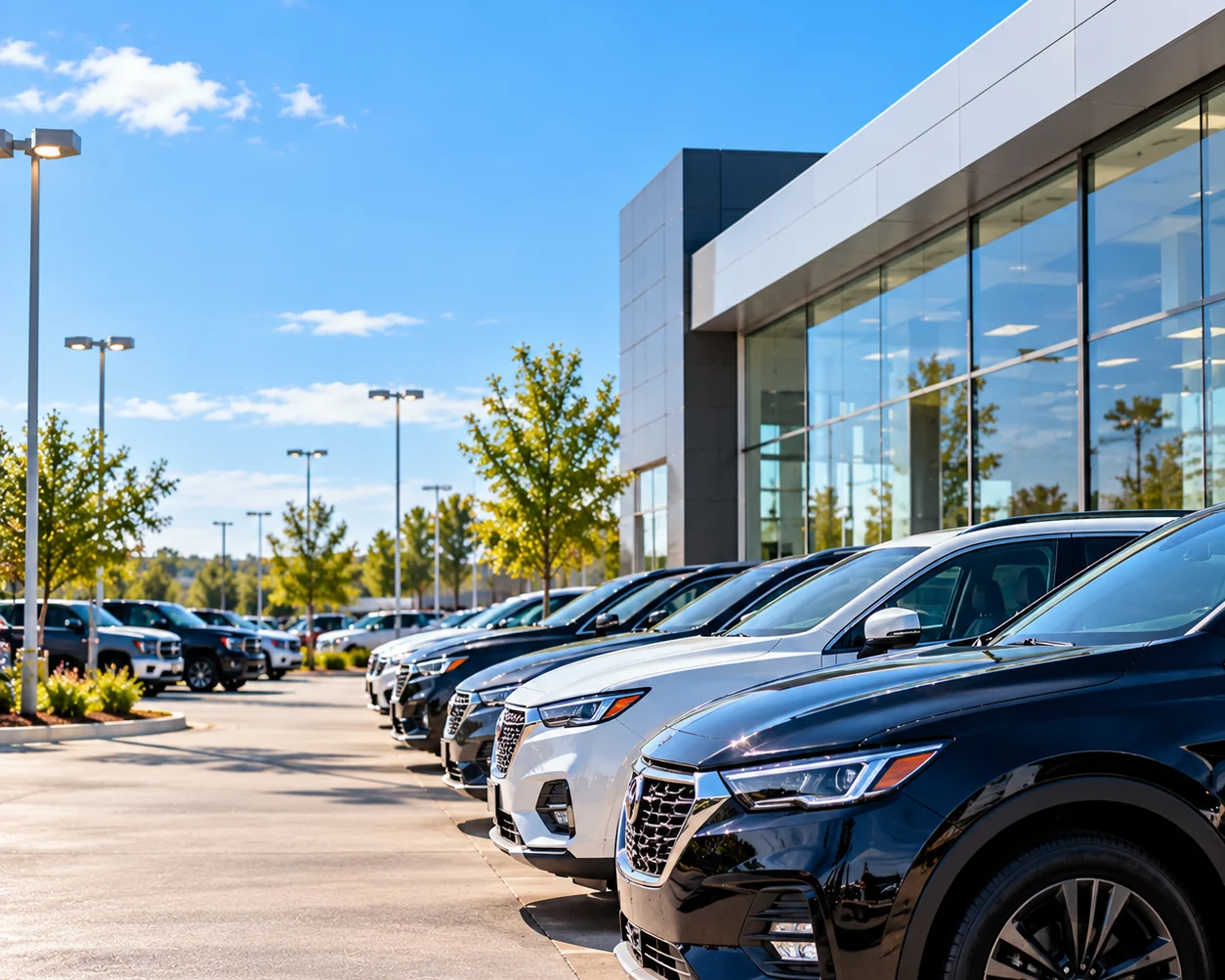
Your own inventory and your customers' vehicles are two different coverages, and neither one is commercial property.
Whether a business sells vehicles or equipment, is franchised or independent, works in new or used product, or never sells anything and only repairs it, the premises and the stock are the easy part of the program. The part that gets overlooked is everything that arrives in a customer's hands and leaves in them: a trade-in parked during a negotiation, a car dropped for an oil change, a bike in for service.
That is what the garage and garagekeepers forms exist to handle, and it is why this segment is underwritten separately from ordinary retail. Vehicles held in your care, custody and control sit outside a standard property policy, and so does your own lot inventory, which has its own form again.
Where automotive claims come from.
The exposures that follow from holding, selling and working on other people's vehicles.
- Every unit you own is parked in one place. Inventory concentrated on a single lot can be stolen, vandalized or damaged by weather in one event. The loss is not only the units, it is the revenue they represented.
- A customer's vehicle in your custody. A trade-in left while a prospect takes a demo out, a car in for a simple service, a bike stored for a customer. Fire, theft, vandalism or damage caused by your own staff all land on you.
- The repair that fails afterward. A mistake or omission by your staff can cost far more than redoing the work. In extreme cases it reaches the consequences of a crash blamed on the faulty repair.
- Employees handling expensive property. A technician damaging a costly component on a customer's vehicle is one exposure. An employee stealing a unit or other property from the premises, or using company credit cards personally, is a different one entirely.
- What you sold keeps operating. Injuries or damage arising from the use of the vehicles or equipment you sell can come back as a claim, and a dealer in new product may face the cost of recalling a particular model.
- The business stops even when the building is rebuilt. A fire that closes a shop is not solved by the cost of rebuilding it. If the customers go elsewhere in the meantime, the cash flow does not come back with the roof.
What belongs on an automotive program.
The specialty forms come first, because they are the ones a general business policy does not contain.
- Garagekeepers liability. Covers customers' vehicles while they are in your care, custody and control, including damage caused by your own negligence. It is the coverage for a trade-in parked during a negotiation, a vehicle in the shop and a vehicle stored overnight, and in some situations it is legally required.
- Dealers open lot, also called dealers physical damage. Covers the inventory you own against collision, loss, theft and the other causes of damage named in the policy. Your lot stock is not covered as building contents.
- Garage liability. The liability line for the operation itself: injury to a visitor on the premises and damage arising out of your work and the vehicles you use.
- Professional liability for the work performed. Written for claims of damage to a vehicle caused by mistakes or omissions by your staff, which can extend past the repair itself to what happened because of it.
- Errors and omissions for dealer transactions. Defense and damages for title errors, credit and leasing law violations and allegations about how a used vehicle's history was recorded.
- Products liability and recall exposure. For injury or damage arising from the vehicles or equipment sold, and for the cost a recall imposes on a dealer in new product.
- Commercial property. The buildings, the shop equipment, the tools and the parts inventory.
- Business income. Replaces the earnings lost while the operation is closed.
- Workers compensation. For technicians, lot staff and sales employees injured on the job.
- Employment practice liability. Defense against discrimination claims and the other human resources allegations a staffed operation can face.
- Crime and employee dishonesty. For theft of vehicles, parts, money or property by employees, and for misuse of company accounts.
- Cyber liability. Customer finance applications and service records held on your systems are the reason this belongs on the schedule.
What changes from one automotive business to the next.
All of these use the garage forms. Which schedule carries the exposure is what differs.
Vehicle and equipment dealerships
A dealership insures three separate things at once: the premises, the inventory it owns and the vehicles customers leave on the lot. Selling new product adds recall exposure and claims arising from the use of what was sold, and the transaction itself adds an errors and omissions exposure through title work, credit and leasing compliance and the representation of a used vehicle's history. Franchise and independent operations differ in the details of the schedule rather than in the structure of the program.
Motorcycle and powersports dealerships
Almost the entire inventory sits at one property, so a single theft, storm or vandalism event can reach most of the units at once, which is what dealers open lot coverage answers. The test-ride and trade-in pattern is heavier than at a car dealership, and every one of those movements puts a customer's machine in your care, custody and control, where garagekeepers coverage is the answer. Service work at the dealership adds a third exposure: a technician damaging a costly component on a customer's bike is your liability, not theirs.
Garage and repair shops
A repair shop rarely owns the most valuable property on its floor. Customer vehicles parked for service have to be covered against fire, vandalism, theft and other hazards while they are in your custody, and garagekeepers liability responds when they are damaged through your negligence: an oil change can turn into replacing a vehicle worth tens of thousands. Faulty repair is the second exposure, handled by professional liability rather than premises coverage, and it can reach the consequences of a crash blamed on the work. Body shops, muffler shops, transmission specialists and tow operations each shift the schedule.
Automotive questions we hear most
Does my commercial property policy cover the vehicles on my lot?
No. Inventory you own is covered by dealers open lot coverage, also called dealers physical damage, which responds to collision, loss, theft and the other causes named in the policy. Customer vehicles in your care are a separate coverage again.
A customer left a car with us and it was damaged. Which coverage responds?
Garagekeepers liability. It covers customers' vehicles while they are in your care, custody and control, whether the vehicle was left during a trade-in negotiation or a test drive, is in the shop for service, or is being stored. It also responds when the damage was caused by your own negligence.
Is a faulty repair a general liability claim?
Generally not. Premises and operations liability answers injury and damage arising from your operation. A claim that your work was done wrong, and the damage that followed from it, is a professional liability matter, and it can extend beyond the cost of correcting the repair to the consequences of a crash attributed to it.
We sell used vehicles. What exposure is easiest to miss?
The paperwork. Title errors, credit and leasing law violations and allegations of negligence in recording a vehicle's history are errors and omissions claims. They arrive as lawsuits about the transaction rather than about the vehicle, and nothing on the property schedule answers them.
- Contractors, Trades & Field Services
- Manufacturing & Distribution
- Energy, Oil & Gas
- Agriculture & Farm
- Transportation & Logistics
- Trucking Insurance
- Restaurant, Hospitality & Food Service
- Retail & Consumer Businesses
- Beauty, Salon, Spa & Personal Care
- Sports, Fitness & Recreation
- Cannabis Insurance
- Medical, Dental & Veterinary Practices
- Senior Care & Residential Facilities
- Professional Services
- Technology & Digital Businesses
- Nonprofit, Community & Public Entity
- Real Estate, Property Owners & Lessors
Let's put the right policy in place.
Oxford Risk LLC is an independent agency. We represent you rather than a single carrier, which means we can place your coverage with the company whose appetite actually fits your risk. Tell us what you need to protect and an advisor will take it from there.
- Call (330) 315-3081
- Hours Monday - Friday: 8:00 AM - 4:00 PM
- Offices Fairlawn, OH, Cranberry Township, PA, Columbus, OH, Livonia, MI