

Farm and Agriculture Insurance
One contract covering the house, the outbuildings, the equipment, the animals and the liability, on a place that is both a home and a business.
Working farms, not hobby acreage with a tractor.
Any operation where the property produces income needs the farm form rather than a residential one, because a residential policy is not written for commercial agricultural use.
- Row crop and grain operations with acreage exposed every growing season.
- Dairy, cattle, hog, sheep, goat and poultry operations where the animals are the revenue.
- Breeders whose animals carry individual values well beyond herd average.
- Farms with employees, seasonal help or visitors coming onto the property.
- Operations relying on high-value machinery they cannot be without during planting or harvest.
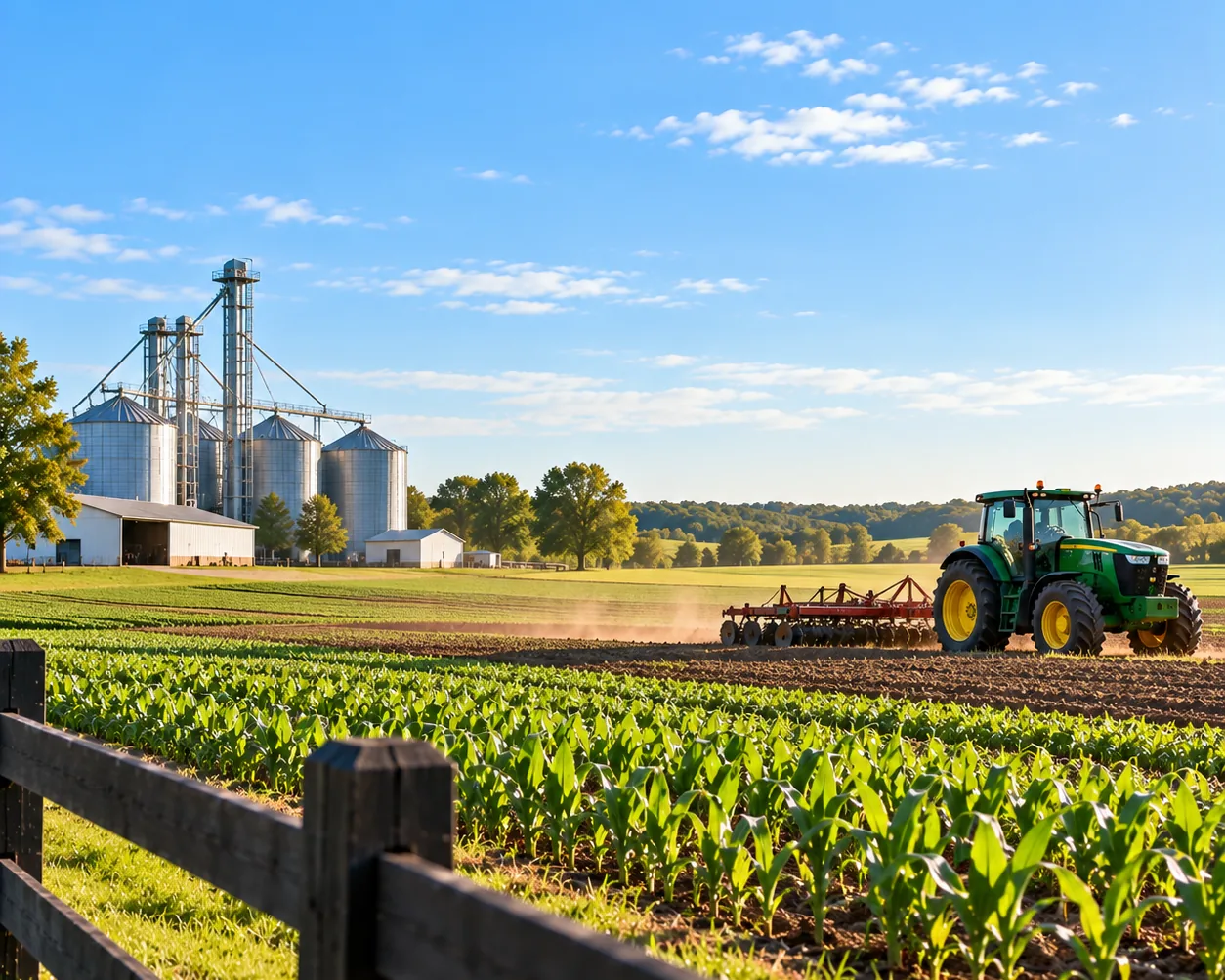
On a farm the home and the business sit on the same ground, and the policy has to know which is which.
A farm package is a distinct contract rather than a homeowners policy with additions. It combines the dwelling and personal contents, the barns and outbuildings, the machinery, the animals and the liability that comes with people on the property. Some policies cover nearly all of it. Others are written to protect either the personal dwelling and possessions or the agricultural buildings and equipment, and the difference lives in the definitions and the exclusions rather than the brochure.
The starting point is property and contents against damage such as fire, flooding, natural disasters and theft. From there the decisions are about what else the operation actually depends on: growing crops, harvested grain, livestock, the equipment that has to run during a narrow window, and the pollution exposure that comes with fuel, fertilizer and chemicals on site.
What actually takes a farm season apart.
Most of these are outside the operator's control, which is the reason they are insurable at all.
- Low yield, poor quality, low price. Those are the three ways a crop year fails. Not producing enough, producing something that cannot be sold, or watching the price fall out from under a good harvest all reach the same bottom line, and the conditions behind them usually cannot be predicted or avoided.
- Hail does not treat a field evenly. A storm is considered severe when stones reach an inch in diameter or larger, and stone size varies within the same storm. Hail can flatten part of a field and leave the rest untouched, which is why it is handled by its own form rather than folded into general property coverage.
- An animal in its prime dies. The loss is not only the animal. It is the replacement cost plus the revenue that does not arrive between the death and the replacement, and for a dairy animal or a trained or purebred animal the replacement may be difficult at any price.
- The equipment fails in the week it is needed. Equipment breakdown, a foreign object drawn into a machine, and glass damage are ordinary farm events with an unusual consequence: the work stops during a window that does not reopen.
- Dual-use property, single set of definitions. When the same driveway, the same buildings and the same vehicles serve the household and the business, coverage questions turn on how the policy classifies them.
- Pollution is generally excluded from general liability. Fuel, fertilizer, chemicals and manure handling create pollution-related exposure that a liability policy is not written to answer, which is what an environmental policy is for.
- People on the property. Employees, seasonal labor and visitors bring workers compensation obligations and premises liability onto ground that is also someone's front yard.
The parts a farm program is assembled from.
The point of the farm form is a single policy that meets the whole need, so the work is deciding which of these belong inside it.
- Dwelling, contents, barns and outbuildings. The property foundation, against fire, flooding, natural disasters and theft. Confirm whether the form covers both the personal side and the agricultural side, because some are written for only one of them.
- Crop-hail. Written for hail and, depending on the policy, fire, flood, frost, theft, lightning, wind and vandalism. Some forms also cover the cost of replanting damaged acres.
- Multi-peril crop insurance. Also called all-risk. It responds when yield is low or quality is poor because of covered perils including hail, insects, disease, drought, fire, flood, frost and wind. It has to be purchased before the growing season begins, on dates the federal government sets.
- Revenue insurance. Protects income by guaranteeing a level of it, rather than insuring the physical crop, which is the answer to a year where the yield came in but the price did not.
- Livestock mortality. Covers premature death of a covered animal from non-natural causes. It behaves like a business loss policy, reaching replacement cost and the revenue lost until the animal is replaced.
- Stored and harvested product. Harvested grain and other stored product, and for operations raising animals, the pasture, rangeland, forage and hay the herd depends on.
- Care, custody and control. For animals or property belonging to someone else while they are in your hands.
- Equipment breakdown, foreign object ingestion and glass. The machinery coverages that answer the losses a property policy treats as wear rather than peril.
- Farm liability, workers compensation and commercial auto. Liability for visitors to the premises, workers compensation for employees and seasonal help, and specialty coverage for vehicles used in the operation rather than for personal driving.
- Environmental liability. For pollution-related claims arising from the way an agricultural operation stores and applies what it works with.
What changes from one operation to the next.
The farm form is the same contract. What differs is which schedule carries the real money.
Row crop and grain operations
Here the exposure is acreage, and the two crop forms answer different questions. Crop-hail is peril-based and priced for hail and the named perils around it. Multi-peril, the all-risk form, responds to low yield or poor quality and has to be in place before the season starts. Revenue coverage is the separate answer for a year when the bushels were there and the price was not.
Livestock and dairy operations
When the animals are the revenue, the loss to insure is premature death from non-natural causes, and the valuation is per animal rather than per herd. Insuring one cow is not the same underwriting exercise as insuring a herd, and age, health and how difficult the animal would be to replace all move the premium. Endorsements can be focused on the perils the operation actually faces: extreme weather, fire, vehicular accidents, theft, accidental shooting, wild animal attacks and building collapse.
Breeders and high-value animals
Purebreds, seed stock cattle, horses and trained animals carry individual values that a schedule built on average worth will not answer, so the valuation is negotiated animal by animal. The replacement problem is also different in kind: the money may be available and the animal may not be, and for an animal representing years of breeding or training the lost revenue behind the death can exceed the cost of buying another.
Farm questions we hear most
What is the difference between crop-hail and multi-peril crop insurance?
Crop-hail is written for hail and, depending on the policy, other named perils such as fire, flood, frost, theft, lightning, wind and vandalism, and some forms pay to replant damaged acres. Multi-peril, also called all-risk, responds to low yield or poor quality caused by covered perils including hail, insects and disease. Multi-peril is a federal program: catastrophic coverage is fully subsidized, additional coverage is available through a buy-up, and it has to be purchased before the growing season begins on dates the government sets.
Does livestock mortality coverage pay if an animal dies of natural causes?
No. The form is written for premature death from non-natural causes, such as accident, injury, illness, disease, disability or extreme weather. Natural causes are excluded and further exclusions vary by policy, so the specific list on your form is the part to read.
Will a farm policy cover both my house and my operation?
That is the point of the farm form, but not every version does it. Some policies cover nearly everything on the place. Others are written to protect either the personal dwelling and possessions or the agricultural buildings and equipment. Check the definitions and exclusions rather than assuming, and confirm how the policy treats property and vehicles used for both.
How is a loss valued?
Ask how replacement cost is calculated and whether lost profits are included, because the answer varies from policy to policy. On livestock it generally reaches both the cost of replacing the animal and the revenue lost between the loss and the replacement.
- Contractors, Trades & Field Services
- Manufacturing & Distribution
- Energy, Oil & Gas
- Transportation & Logistics
- Trucking Insurance
- Automotive Businesses
- Restaurant, Hospitality & Food Service
- Retail & Consumer Businesses
- Beauty, Salon, Spa & Personal Care
- Sports, Fitness & Recreation
- Cannabis Insurance
- Medical, Dental & Veterinary Practices
- Senior Care & Residential Facilities
- Professional Services
- Technology & Digital Businesses
- Nonprofit, Community & Public Entity
- Real Estate, Property Owners & Lessors
Let's put the right policy in place.
Oxford Risk LLC is an independent agency. We represent you rather than a single carrier, which means we can place your coverage with the company whose appetite actually fits your risk. Tell us what you need to protect and an advisor will take it from there.
- Call (330) 315-3081
- Hours Monday - Friday: 8:00 AM - 4:00 PM
- Offices Fairlawn, OH, Cranberry Township, PA, Columbus, OH, Livonia, MI