

Beauty, Salon, Spa & Personal Care Insurance
Services performed on a person, premises with constant foot traffic, and equipment the business cannot open without.
Any business whose service is performed on a person.
These businesses differ in premises, equipment and retail mix more than in the underlying service, which is why they share one program with the weightings moved around.
- Barbershops and hair salons, from a single chair to a full floor.
- Boutique, high-end and retail outlet salons, where equipment values and product sales both run higher.
- In-home hair salons operating out of a residence.
- Mobile salons, where the service happens at the client's location.
- Spa salons offering treatments rather than cuts.
- Tanning salons, where the equipment is the service.
- Nail salons and pedicure studios.
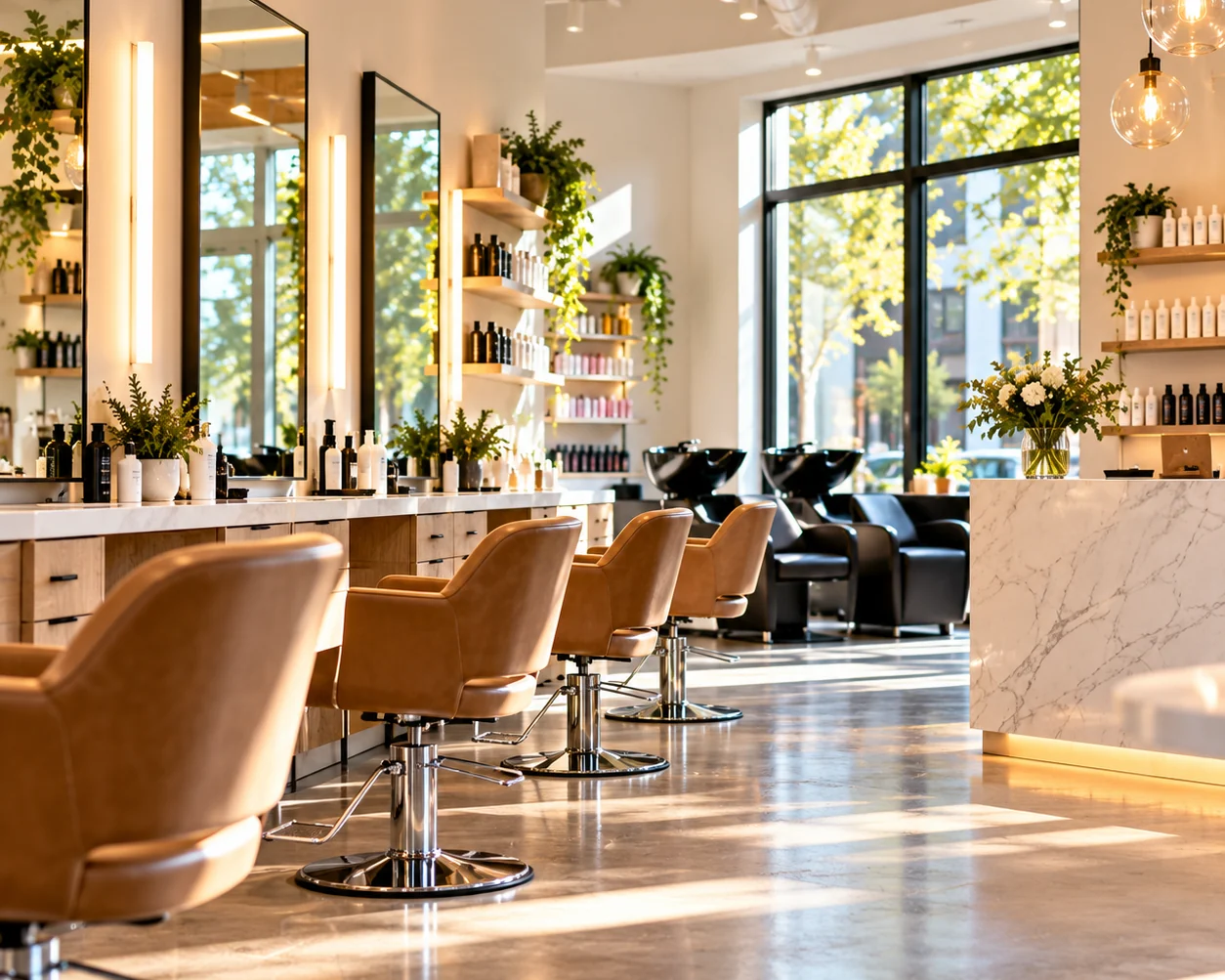
In personal care the most exposed thing in the building is the service itself.
Most retail businesses insure the premises and the stock. A salon, spa or nail studio carries both of those and then adds something else: a service performed directly on a client's body, by hand, often with chemicals. When a client believes that service harmed them, the claim is against your work rather than your housekeeping, and it is a different policy that answers.
The premises still matter, and they matter more than in a quiet shop. Foot traffic is high, floors collect clippings and water, and the equipment is plugged in and running all day. Adequate general liability limits are the starting point, and an umbrella policy is the usual way to raise that limit once the base policy runs out.
Where salon claims come from.
High traffic, hands-on services, and equipment that cannot go down.
- High foot traffic is a liability problem before it is a compliment. Salons move a lot of people through a small space. A customer who slips on clippings that did not get swept up, or who takes a shock from a hairdryer, can sustain a serious injury.
- The service is the claim. A client's hair can be damaged, their skin can react poorly to a chemical in a product you used, they can develop an infection, or they may simply believe a service you provided harmed them. That is an allegation against your work rather than your premises.
- What you sell over the counter is a second liability. Retailing product puts you inside a claim over the sale as well as the service, if something you sold a client causes harm.
- Equipment failure closes the business. Several hairdryers running at once can overload the electrical circuit. The chairs, tools, stations, displays and sterilizers are not cheap to replace, and the business stops earning while they are out of service.
The lines a personal care program is built from.
Familiar coverages, weighted around the service rather than the storefront.
- General liability. For injury to clients and visitors on the premises. The limit matters more here than in a low traffic business, and an umbrella policy is what raises it.
- Errors and omissions liability. Also called professional liability. For claims that a service you performed caused harm, including defense costs and money awarded to the plaintiff.
- Product liability. For harm caused by a product you sell, on the same defense and damages basis.
- Commercial property. Damages to your property and inventory where the damage results from a covered event.
- Systems breakdown. Repairing or replacing equipment damaged in a covered incident, and in some cases the income lost while it is out of service.
- Business interruption. Operating expenses and the cost of a temporary location when your own location cannot open.
- Workers compensation. For employees who are injured or become sick on the job.
- Cyber liability. For the computer system holding your records and appointments, against hackers and data breaches.
- Employment practice liability. Protection against claims of discrimination, harassment or other improper behavior.
What is different about insuring each one
The same coverages appear on every one of these policies. What changes is which of them carries the claim.
Hair salons and barbershops
The premises exposure is the most literal in the industry: clippings on the floor and a customer who slips on them, or an injury from a tool as ordinary as a hairdryer. Alongside it sits the service claim, because a client whose hair is damaged by a cut or a chemical treatment is alleging that your work harmed them, which is errors and omissions territory rather than general liability.
Boutique, high-end and retail outlet salons
Two things move up at this end of the market: the value of what is in the building, and the amount of product sold across the counter. Salon chairs, professional-grade styling tools and makeup stock represent real money, so property values and systems breakdown coverage need to reflect what replacement actually costs. Retailing product also brings product liability into the program properly, because a client harmed by something you sold can sue over the sale as easily as over the service.
In-home and mobile salons
A salon run from a residence sits in the gap between two policies, because home insurance usually does not provide coverage for damages resulting from business operations. A home-based business policy, which typically includes general liability, is what covers the clients you see at home. Mobile operations invert the problem: the service happens at the client's location rather than yours, so the premises you are answerable for are not your own and the equipment travels with you.
Spa salons
Spa work goes further into treatment of the body than a haircut does, which pushes professional liability from a secondary coverage to a central one. The claims that matter are the ones alleging the treatment itself caused harm: a poor reaction to a chemical, or a client who believes the service injured them.
Tanning salons
Tanning is equipment led in a way the rest of the industry is not: the beds are simultaneously the service, the largest capital items and the electrical load in the building. Systems breakdown coverage therefore carries more of the program, along with the income lost while a unit is out of service and cannot be booked. The service exposure does not disappear, since a tanning service is still performed on a client and can still be alleged to have caused harm.
Nail salons
The distinctive exposures here are chemical and biological rather than mechanical. Fumes from the products used at manicure and pedicure stations make ventilation a genuine operating condition, and infection control around shared implements is where the professional liability claim most often begins, with a client who develops an infection or reacts badly to a chemical. The premises risk is specific too, since a customer tripping while getting out of a pedicure chair is the classic general liability claim in this class.
Salon and spa questions we hear most
Is general liability enough for a salon?
It covers the premises: a client who slips, a client injured by equipment. It does not cover the service. A claim that a cut, a color or a treatment caused harm is an errors and omissions claim, and that is a separate coverage from the one that pays for the slip.
I work out of my house. Does my homeowners policy cover that?
Usually not. Home insurance generally does not provide coverage for damages resulting from business operations. A home-based business policy, which typically includes general liability, is what covers a salon run out of a residence.
Do I need product liability if I mostly provide services?
If you sell anything over the counter, yes, because product liability is what responds when a product you sold causes harm. If you sell nothing, that exposure is smaller, but the products you apply during a service still sit inside the professional liability question.
What affects the cost of a policy like this?
Factors such as the size of the business, how many employees you have, how long you have been operating and where you are located.
- Contractors, Trades & Field Services
- Manufacturing & Distribution
- Energy, Oil & Gas
- Agriculture & Farm
- Transportation & Logistics
- Trucking Insurance
- Automotive Businesses
- Restaurant, Hospitality & Food Service
- Retail & Consumer Businesses
- Sports, Fitness & Recreation
- Cannabis Insurance
- Medical, Dental & Veterinary Practices
- Senior Care & Residential Facilities
- Professional Services
- Technology & Digital Businesses
- Nonprofit, Community & Public Entity
- Real Estate, Property Owners & Lessors
Let's put the right policy in place.
Oxford Risk LLC is an independent agency. We represent you rather than a single carrier, which means we can place your coverage with the company whose appetite actually fits your risk. Tell us what you need to protect and an advisor will take it from there.
- Call (330) 315-3081
- Hours Monday - Friday: 8:00 AM - 4:00 PM
- Offices Fairlawn, OH, Cranberry Township, PA, Columbus, OH, Livonia, MI