

Transportation & Logistics Insurance
Vehicles, drivers, passengers and the goods of other people, all moving at once.
Operations that move people, goods or both for hire.
This covers for-hire transport in its broad sense: passenger operations, delivery and courier work, household and commercial moving, specialty haulers and air operations. Scale matters as much as sector, and a single owner operator and a company with a dispatch office are insured very differently.
- Passenger operations: taxi, black car and limousine, charter, tour and transit buses, school transport and non-emergency medical transport.
- Delivery and courier operations, including independent contractors running routes for a parcel company.
- Moving companies, from local household goods to long distance, international, packing only and self service.
- Specialty haulers carrying livestock, pets, high value goods or marine freight.
- Air operations, from a private airstrip to a municipal or commercial airport.
- Driving schools, where the vehicle is the product and a learner is at the wheel.
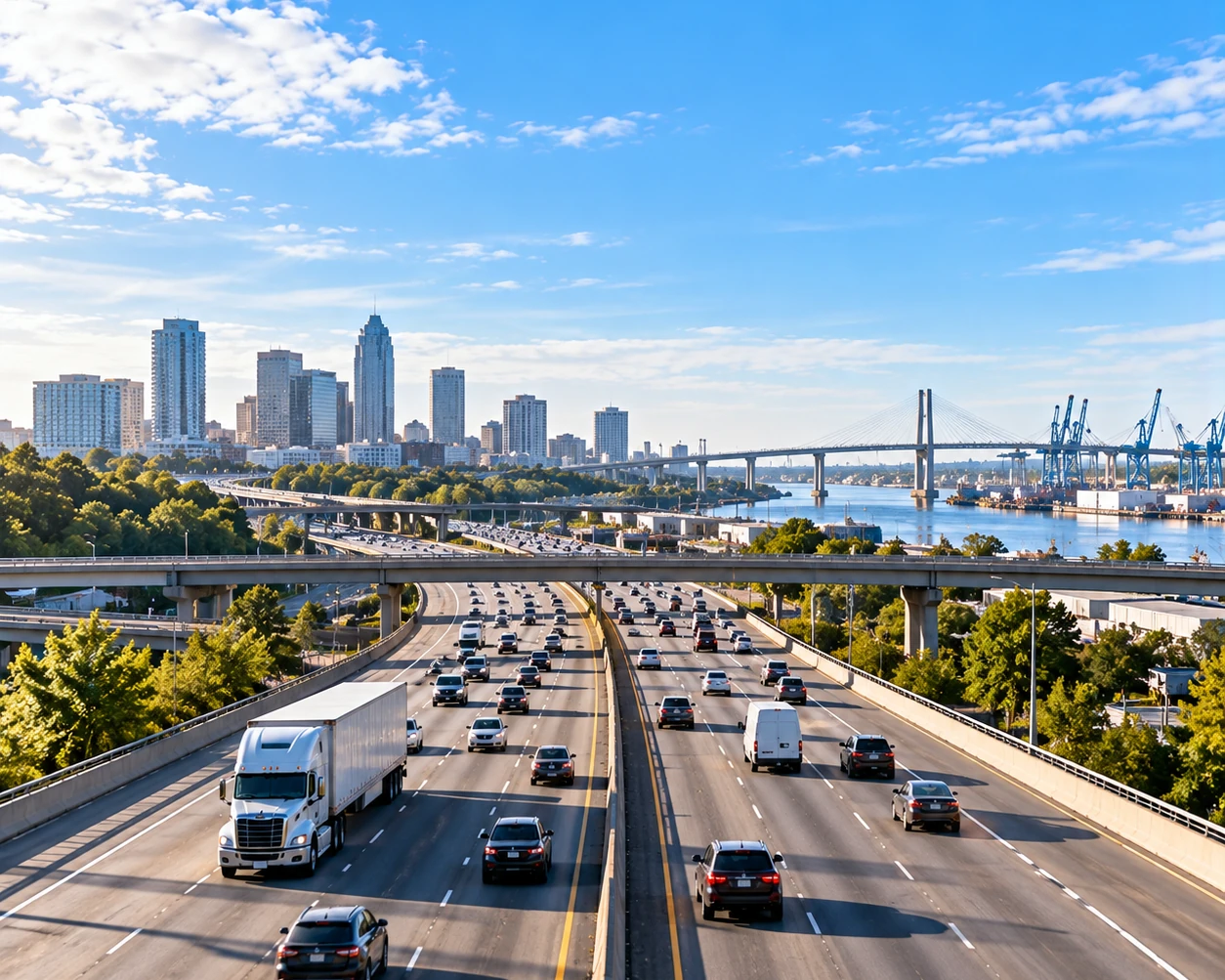
One truck on short local runs and a fleet moving high value freight across the country are not the same risk.
Everything in this segment shares the same four moving parts: the vehicles, the people driving them, the passengers or freight inside, and the property of others that ends up in your care. What changes from one operation to the next is which of those four carries the money.
Vehicles are where a transportation program starts. For some operations a standard business auto policy is enough, covering physical damage to owned vehicles and the liability a driver creates for injury or property damage. Once the vehicle count grows, fleet coverage becomes the more practical structure. What you carry then decides the rest of the policy: high value loads attract cargo theft, chartered buses and limousines put passengers behind the liability limit, and pets, livestock and marine shipments each need the policy to say so.
Where transportation claims actually come from.
Most of them start with a vehicle and end somewhere the vehicle policy does not reach.
- The vehicle policy and the load are two different policies. A business auto policy answers for the truck and for the harm the driver causes. It does not pay to replace the freight in the back. Cargo theft, damage in transit and spoilage need cargo or inland marine coverage written for what you actually carry, and a high value load is the exact case where the gap gets found.
- Carrying people raises the liability question, not the property question. A bus, limousine or medical transport vehicle can have several passengers in it, and one accident produces several bodily injury claims at once. Passenger liability, and the limit chosen for it, is the decision that matters most in any operation that transports people rather than goods.
- Commercial driving is not what a personal auto policy was priced for. A driver running a delivery route or a rideshare shift in a personal vehicle is generally outside the personal policy, and the company hiring them often carries a policy that protects the company rather than the driver. That leaves the driver's own vehicle and the driver's own liability unaddressed unless commercial coverage is in place.
- Other people's property spends time in your hands. A household's furniture in a truck, a customer's goods in your warehouse, an aircraft in your hangar: each one is property you do not own but are answerable for. That duty sits outside a standard property policy and is the exposure most often missing from an otherwise complete program.
- The work is physical and the injuries are real. Lifting, stairs, loading docks and long hours produce employee injuries at a rate office businesses do not see. Workers compensation is rarely optional here, and independent contractors who assume the hiring company covers them usually find it does not.
- A schedule failure is a liability event. A delayed shipment or a missed connection can cost a customer money and can breach a contract. That is a financial loss claim, not a property claim, and general liability was not written to answer it.
The lines a transportation program is built from.
Every operation in this segment uses some version of the same short list. Which parts carry the real limit is what changes.
- Business auto, or fleet. The foundation: physical damage to owned vehicles and liability for the injury and property damage a driver causes. Operations with a large number of vehicles usually move to a fleet structure rather than schedule each unit.
- Cargo and transit coverage. Motor truck cargo and inland marine respond to the goods being carried rather than the vehicle carrying them, and they extend to property while it is away from your premises. What you haul determines the form and the limit.
- Coverage for goods and vehicles you store. If part of the operation involves holding a customer's goods or vehicles, that requires specific coverage for property of others. Aviation operations meet the same idea as hangar keepers coverage.
- Errors and omissions liability. This is the line that answers a claim of financial loss from a logistics failure rather than physical damage, including legal defense and damages where a delay or an error in your instruction is alleged to have caused the loss.
- Commercial property and general liability. Terminals, garages, offices, hangars and the equipment inside them, plus liability for injury to someone on your premises. Smaller operations often carry these together as a business owners policy.
- Workers compensation. Medical costs and lost time for on-the-job injury. Contractors operating without an employer behind them need their own policy rather than relying on the hiring company's.
- Commercial umbrella. Passenger and cargo claims are the ones most likely to exhaust an underlying auto or general liability limit, which is what makes an umbrella a common part of this program rather than an afterthought.
- The business side. Cyber liability where a network holds customer information or takes payments, employment practice liability for discrimination and harassment allegations, and environmental coverage where hazardous materials are handled.
Interstate, international and intercontinental work each add their own filing and liability questions, so an operation that crosses a border is rarely insured the same way as one that does not.
What is different about insuring each operation
The same handful of coverages, weighted very differently. Motor carrier and long haul trucking operations are addressed on their own page.
Livery: taxi, limousine and medical transport
Livery is business auto written for vehicles that earn revenue by transporting people, and the definition turns on scheduling: transport arranged ahead of time or running a fixed route is livery, while a business that carries people only incidentally, such as a hotel shuttle, generally is not. The gap that catches drivers is ownership of the policy, because a company's business auto coverage may answer only for the company's liability and not for the driver's own vehicle or exposure, and the same is true of a rideshare platform's coverage behind a personal auto policy. Requirements here are unusually local, varying by state, region and sometimes by the city an operator is licensed in.
Moving companies
A moving company's largest exposure is a truckload of household goods it does not own, so cargo liability and the duty owed as bailee sit at the center of the policy, alongside coverage for possessions held in storage at your own facility. Claims are as often about the building as the contents: a crew gouging the walls of a customer's new home, an employee injured on a flight of stairs while carrying furniture, or a theft from a customer's property. A company that only packs and loads carries a different risk from one that packs, transports and delivers, with environmental coverage needed once hazardous materials are involved.
Parcel delivery contractors
Last mile delivery work is driving work, so business auto is the core coverage, and a personal auto policy is not a reliable substitute once the vehicle is being used on a route. The distinctive question is employment status: as a contractor you are not an employee of the parcel company, so on-the-job injury needs your own workers compensation, while the company's contractor policy is usually there to protect the company from claims involving you rather than to cover you. Two further pieces are specific to this work: cargo coverage for packages damaged or stolen in your custody, and non-trucking liability for the stretches when you are driving the delivery vehicle for personal reasons.
Driving schools
The vehicle is the classroom, and it is driven by learners with an instructor beside them at the dual controls, which makes business auto the first and largest coverage whether the school runs one car or a hundred. Beyond the fleet, instruction itself is the exposure: an instructor can be held responsible when advice or training is alleged to have caused a crash, which is a professional liability claim rather than an auto claim. Because many students are young, abuse and molestation liability is a coverage schools should address directly.
Aviation operations
Aviation coverage is assembled from named parts rather than bought as one policy: hull coverage for physical damage to the aircraft, passenger liability for the people on board, hangar keepers for aircraft belonging to others while they are in your care, and non-owned aircraft coverage for flying equipment you do not own. Scale and role drive the difference, since a commercial airport, a municipal field and a private airstrip have little in common. The facilities are their own exposure as well, covering buildings, ground equipment and inventory.
Transportation questions we hear most
My personal auto policy covers me, so why do I need commercial coverage to drive a route?
Because a personal auto policy is generally not written for a vehicle being used to generate revenue. A claim that happens while you are delivering, carrying passengers or running a rideshare shift can fall outside it, and the company you drive for typically carries coverage that protects the company rather than your vehicle or your own liability.
Does my auto liability coverage pay for the freight if a load is stolen or damaged?
No. Auto liability answers for injury and property damage the driver causes to others, and physical damage coverage answers for the vehicle. The goods being carried need cargo or inland marine coverage written for what you actually haul, and the limit should reflect the value of a full load rather than an average one.
We store customer goods between legs of a move. Is that covered by our property policy?
Not usually. A commercial property policy is built around property you own. Goods belonging to a customer that are held at your facility are property of others, and covering them takes a specific extension or form. The same principle applies to vehicles or aircraft held in your care.
Does a hotel shuttle need livery coverage?
Generally no. Livery coverage is aimed at vehicles whose purpose is transporting people for revenue on a scheduled basis or along a set route. A business that moves people only incidentally to what it actually sells usually falls outside that definition, though the vehicle still needs commercial auto coverage.
- Contractors, Trades & Field Services
- Manufacturing & Distribution
- Energy, Oil & Gas
- Agriculture & Farm
- Trucking Insurance
- Automotive Businesses
- Restaurant, Hospitality & Food Service
- Retail & Consumer Businesses
- Beauty, Salon, Spa & Personal Care
- Sports, Fitness & Recreation
- Cannabis Insurance
- Medical, Dental & Veterinary Practices
- Senior Care & Residential Facilities
- Professional Services
- Technology & Digital Businesses
- Nonprofit, Community & Public Entity
- Real Estate, Property Owners & Lessors
Let's put the right policy in place.
Oxford Risk LLC is an independent agency. We represent you rather than a single carrier, which means we can place your coverage with the company whose appetite actually fits your risk. Tell us what you need to protect and an advisor will take it from there.
- Call (330) 315-3081
- Hours Monday - Friday: 8:00 AM - 4:00 PM
- Offices Fairlawn, OH, Cranberry Township, PA, Columbus, OH, Livonia, MI